• Courses
  • Study Pathways
  • About
  • FAQ
  • Blog
  • Licence GuidesTools & CalculatorsRecognition of Prior LearningCourse ComparisonStudy While Working
  • Contact
  • Enquire Now
  • Courses
  • Study Pathways
  • About
  • FAQ
  • Blog
  • Licence GuidesTools & CalculatorsRecognition of Prior LearningCourse ComparisonStudy While Working
  • Contact
Enquire Now
Prepare Training

Nationally recognised building and construction qualifications delivered 100% online.

RTO 45384

Qualifications

BuildingCertificate IV in BuildingCertificate IV NSW/WADiploma of BuildingDiploma of Building NSW/WAAdvanced DiplomaWork Health & SafetyCertificate IV in WHSDiploma of WHSProject SupportEstimatorContract AdministratorSupervisionLow-Rise Site SupervisorOpen Class Site SupervisorView All Courses

Resources

BlogLicence GuidesTools & CalculatorsRecognition of Prior LearningCourse ComparisonFAQs

Get in Touch

1300 142 181hello@prepare.com.au
15/1 Newspaper Pl
Maroochydore QLD 4558
Enquire Now

© 2026 Prepare Training. RTO 45384. All rights reserved.

Privacy PolicyTerms of Service
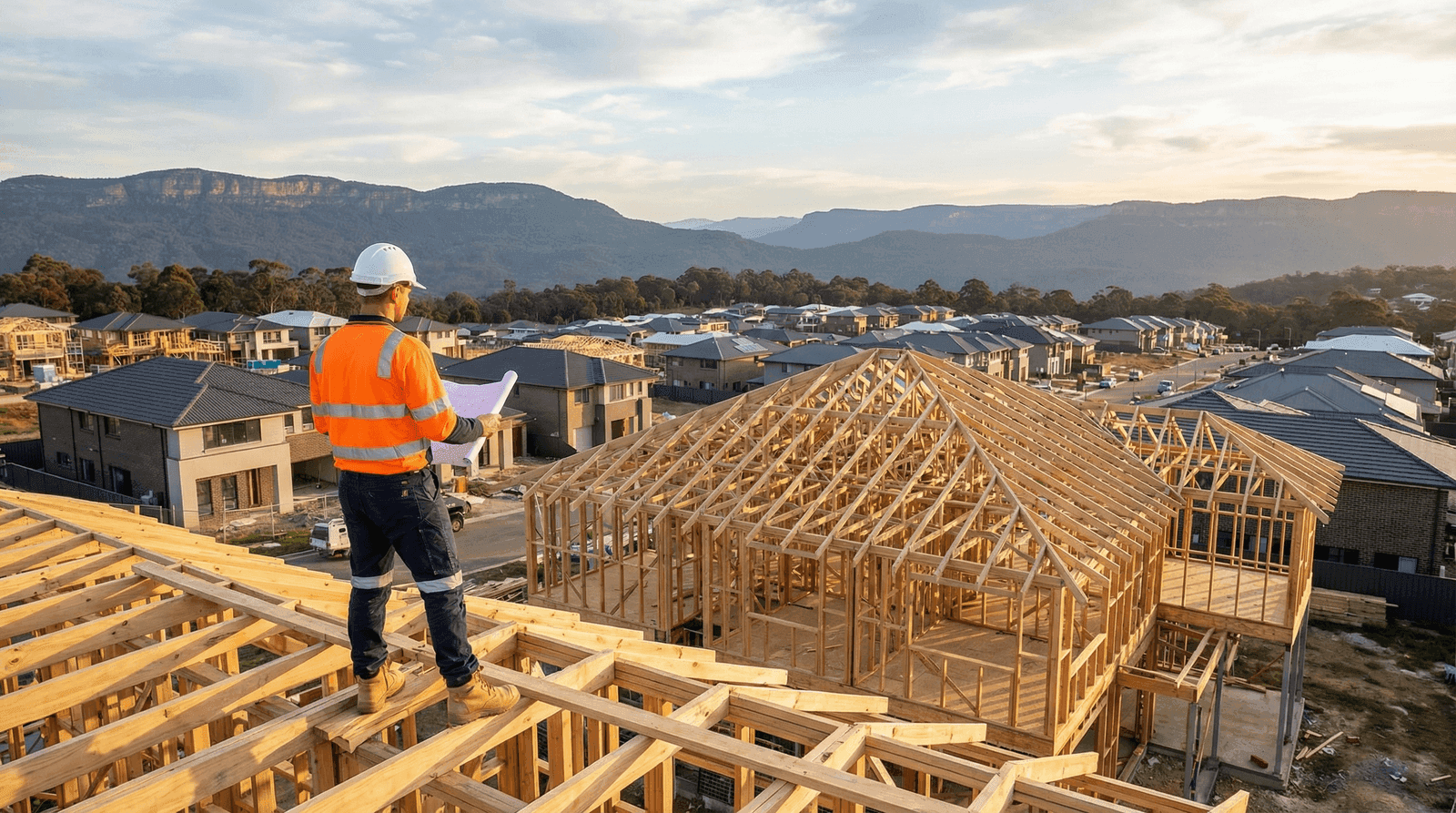
Australian builder standing on timber roof frame overlooking suburban construction site at golden hour
Builder Licensing Guide 2026

How to Become a Builder in Australia

How to become a builder in Australia — from choosing the right qualification to getting your state licence. Four clear steps, every state covered, one complete guide.

View the PathwayLicensing by State
  1. Home
  2. Blog
  3. How to Become a Builder in Australia
Published 11 Mar 2026·Updated 11 Mar 2026

TL;DR

Becoming a licensed builder in Australia takes four steps: get a nationally recognised qualification (CPC40120 for low-rise, CPC50220 for medium-rise), gain 2–4 years' practical experience, and apply for your state licence. Each state has its own regulator and requirements. Total investment is $8,000–$25,000 over 2–5 years. Median salary: $93,000/year, with top earners exceeding $140,000.

$93k
Median Builder Salary
8
State/Territory Regulators
2–5 Yrs
Typical Pathway
100%
Study Online

In This Guide

  1. The Builder Pathway — Overview
  2. Step 1: Choose Your Qualification
  3. Step 2: Complete Your Training
  4. Step 3: Gain Practical Experience
  5. Step 4: Apply for Your Builder's Licence
  6. Licensing Requirements by State
  7. How Much Does It Cost?
  8. How Long Does It Take?
  9. Builder Salary in Australia
  10. Frequently Asked Questions
Your Roadmap

The Builder Pathway — Overview

If you want to know how to become a builder in Australia, the pathway is the same in every state and territory: qualification + experience + licence application. The details — which regulator you deal with, how many years of experience you need, and what financial requirements apply — vary by state. But the core framework is consistent nationally.

Australia's construction industry employs over 1.3 million people and contributes more than $150 billion to GDP annually. Licensed builders sit at the centre of this ecosystem — they are the professionals legally authorised to contract directly with homeowners, manage construction projects, and take responsibility for building compliance.

Unlike trades such as plumbing or electrical — where you must complete a formal apprenticeship — the builder pathway is open to anyone willing to study and gain supervisory experience. Carpenters, bricklayers, project managers, estimators, and even people from non-construction backgrounds can become licensed builders. The key requirement is demonstrating competence in building management, not tool-based trade work.

This guide covers every step of the pathway, with state-by-state licensing details and links to our dedicated guides for each jurisdiction. Whether you are an experienced tradesperson looking to step up, a project manager formalising your qualifications, or starting from scratch — the pathway starts here.
The Four-Step Builder Pathway

1
▼

Choose Your Qualification

Select the nationally recognised qualification that matches the type and scale of building work you want to do. CPC40120 (low-rise), CPC50220 (medium-rise), or CPC60220 (unrestricted).

2
▼

Complete Your Training

Enrol with a Registered Training Organisation (RTO) and complete your qualification through formal study or RPL. Prepare Training delivers all three qualifications 100% online.

3
▼

Gain Practical Experience

Accumulate 2–4 years of supervisory, management, or administration experience in building and construction. Experience must typically be gained under a licensed builder.

4

Apply for Your State Licence

Submit your application to your state or territory regulator with your qualification transcript, experience evidence, police check, and any required financial documentation.

⚠️

You Cannot Build Without a Licence

Every state and territory in Australia requires builders to hold a valid licence or registration. Penalties for unlicensed building work range from $3,300 to $110,000 depending on the jurisdiction, with repeat offenders facing imprisonment. Owner-builder permits exist for personal projects but do not authorise commercial work.

Step 1

Choose Your Qualification

Three nationally recognised qualifications map directly to builder licence classes across Australia. Your choice determines the type and scale of building work you can legally perform.

Certificate IV in Building and Construction (CPC40120)

Low-Rise Builder

The Certificate IV in Building and Construction (CPC40120) is the entry-level qualification for builder licensing in Australia. It qualifies you for low-rise residential work — Class 1 and 10 buildings up to 2 storeys in most states. This covers houses, granny flats, townhouses, sheds, carports, and small-scale renovations.

CPC40120

National Code

12–18 Mths

Typical Duration

19 Units

Core + Elective

View Course Details

Diploma of Building and Construction (CPC50220)

Medium-Rise Builder

The Diploma of Building and Construction (CPC50220) qualifies you for medium-rise building work — Class 1 and 10 buildings up to 3 storeys, plus non-structural work on larger buildings. It is the most popular qualification for builders stepping into multi-unit residential and commercial projects such as townhouse complexes, walk-up apartments, and retail fitouts.

CPC50220

National Code

18–24 Mths

Typical Duration

27 Units

Core + Elective

View Course Details

RPL — For Experienced Tradespeople

Fast-Track Pathway

Recognition of Prior Learning (RPL) is the fastest pathway for experienced construction professionals. If you have been working in the industry for several years — supervising trades, managing projects, or running building sites — RPL allows your existing skills and knowledge to be formally assessed against the qualification requirements. You receive the same nationally recognised qualification as someone who studied full-time.

8–16 Wks

Typical RPL Duration

Same

Qualification Outcome

Cert IV / Dip

Available Levels

Check Your Eligibility

Advanced Diploma (CPC60220)

Open / Unrestricted Builder

The Advanced Diploma of Building and Construction (CPC60220) qualifies you for unrestricted building work — all building classes, all heights, all construction types. This is the highest VET-level qualification in the building pathway, required for open or unlimited builder licences in states like Queensland and NSW.

CPC60220

National Code

24–36 Mths

Typical Duration

Unrestricted

Scope of Work

View Course Details
Step 2

Complete Your Training

Your qualification must be delivered by a Registered Training Organisation (RTO) registered with the Australian Skills Quality Authority (ASQA). Prepare Training (RTO 45384) delivers the CPC40120 Certificate IV, CPC50220 Diploma, and CPC60220 Advanced Diploma 100% online with flexible, self-paced study — so you can keep working while you qualify.

The qualification covers everything a builder needs to manage construction projects competently: building codes and standards, structural principles, contract administration, work health and safety, site supervision, estimating, project management, and environmental management. Units are assessed through practical projects, written assessments, and workplace evidence.

There are two pathways to completing your qualification:

Formal Study

Complete each unit of competency through structured learning, assessments, and practical projects. Ideal for people new to construction management or those wanting a thorough grounding in every topic.

  • 100% online and self-paced
  • Dedicated trainer support
  • Real-world project assessments
  • Certificate IV: 12–18 months typical
  • Diploma: 18–24 months typical

RPL (Recognition of Prior Learning)

Have your existing skills and experience formally assessed against the qualification requirements. Same nationally recognised outcome, significantly faster for experienced professionals.

  • Evidence-based assessment
  • Typically 8–16 weeks
  • Same qualification outcome
  • Ideal for 5+ years experience
  • Gap training where needed
Builder studying building qualifications online at home desk with laptop showing construction plans
💡

Choose the Right Qualification Level

If you plan to work across both residential and commercial projects, start with the Diploma (CPC50220). It includes all Certificate IV content and qualifies you for medium-rise work from day one. Upgrading from Certificate IV to Diploma later means additional study time and cost — doing the Diploma first is more efficient if your career goals extend beyond low-rise residential.

Step 3

Gain Practical Experience

Every state requires practical experience before granting a builder's licence. The experience must be in building supervision, management, or administration — not purely tool-based trade work. You need to demonstrate that you have coordinated trades, managed projects, interpreted plans, and taken responsibility for building compliance.

Most states require 2 to 4 years of relevant experience. Some states (like Queensland) reduce the requirement to 2 years if you hold a relevant trade qualification. Experience must typically be gained while employed under a licensed builder or as a nominated supervisor on licensed projects.

The experience requirement exists to protect consumers and ensure that licensed builders can competently manage real construction projects. Regulators assess not just the number of years but the quality and diversity of your project experience — they want to see evidence across different project types, construction stages, and trades coordination. A builder who has supervised 20 identical house builds may be assessed differently than one who has managed a mix of renovations, new builds, and commercial fitouts.

What Counts as Experience

Supervisory & Management
Australian site supervisor coordinating tradespeople on a residential timber-frame construction site

Experience That Counts

  • Coordinating and scheduling trades across project stages
  • Managing contracts, variations, and progress claims
  • Supervising construction from slab to handover
  • Interpreting plans, ordering materials, managing site safety
  • Tendering, estimating, and financial management of projects

Does not count: Trade-only work without supervisory responsibility, work under an owner-builder permit, or experience gained overseas (some states may accept overseas experience with additional verification).

Experience Requirements by State

StateRegulatorExperience RequiredTrade Background Discount
QLDQBCC2–4 yearsYes — 2 years with trade qualification
NSWFair Trading2–4 yearsVaries by endorsement
VICVBA3–5 yearsSome categories may differ
SACBS3+ yearsCase-by-case assessment
WADMIRS3+ yearsVaries by registration type
TASCBOS2+ yearsAssessed individually
NTNT Licensing2–3 yearsAssessed individually
ACTACT Planning3+ yearsAssessed individually

Document Everything From Day One

Start collecting evidence of your experience now — even if you are years away from applying for a licence. Keep records of projects you have supervised (addresses, date ranges, scope of work), photos of construction stages, contracts, and references from licensed builders you have worked under. Retrospectively gathering 4 years of evidence is far harder than documenting it as you go.

Step 4

Apply for Your Builder's Licence

Once you have your qualification and experience documented, you are ready to apply. The application process varies by state but follows a similar pattern everywhere.

Typical Licence Application Process

1
▼

Gather Your Documents

Statement of Attainment / qualification transcript, evidence of experience (project logs, referee statements), National Police Certificate (typically no older than 3 months), certified photo ID, and any required financial documentation.

2
▼

Complete the Application Form

Download the application form from your state regulator. Complete all sections — incomplete applications are the leading cause of delays. Some states offer online lodgement.

3
▼

Pay the Application Fee

Application fees range from $300 to $1,700 depending on the state and licence class. Fees are non-refundable in most jurisdictions, so ensure your documentation is complete before applying.

4

Assessment and Approval

Your regulator assesses your qualification, experience, character, and financial standing. Processing times range from 4 weeks (WA, TAS) to 8+ weeks (QLD, NSW). Some states may request an interview.

Builder licence application documents on desk including Australian passport, police certificate, and CPC50220 statement of attainment
💡

Get It Right First Time

Across all states, the most common reason for application delays is incomplete documentation. Before submitting, cross-check every requirement on your regulator's checklist. In Queensland, 4 out of 5 applicants receive a request for additional information — adding weeks to the process. Double-check referee qualifications, document dates, and financial evidence before you submit.

State-by-State

Licensing Requirements by State

Every state and territory has its own builder licensing authority with different requirements, fees, and licence classes. Below is a summary — click through to our detailed guide for each state.

Australian Builder Licensing — State Comparison

StateRegulatorKey QualificationExperienceApplication FeeDetailed Guide
QLDQBCCCPC40120 / CPC50220 / CPC602202–4 yearsFrom $891→ QBCC Guide
NSWFair TradingCPC40120 / CPC50220 / CPC602202–4 yearsFrom $558→ NSW Guide
VICVBACPC40120 / CPC502203–5 yearsFrom $543→ VIC Guide
SACBSCPC40120 / CPC502203+ yearsFrom $360→ SA Guide
WADMIRSCPC40120 / CPC502203+ yearsFrom $470→ WA Guide
TASCBOSCPC40120 / CPC502202+ yearsFrom $350→ TAS Guide
NTNT LicensingCPC40120 / CPC502202–3 yearsFrom $300→ NT Guide
ACTACT PlanningCPC40120 / CPC502203+ yearsFrom $400→ ACT Guide

Queensland (QBCC)

QLD

Queensland's QBCC issues three builder licence classes: Low Rise (CPC40120), Medium Rise (CPC50220), and Open (CPC60220). You need 2–4 years' experience, must meet Minimum Financial Requirements (NTA of $46,000+ for SC2), and pass character checks. Application fees start from $890.61. Processing typically takes 6–8 weeks.

Queensland is unique in requiring builders to meet ongoing financial solvency requirements and participate in the Home Warranty Scheme for residential work over $3,300 including GST.

Read our complete QBCC builder licence guide →

New South Wales (Fair Trading)

NSW

NSW Fair Trading issues builder licences with endorsements for different classes of building work. You need a CPC40120 for general building (low-rise), CPC50220 for medium-rise, or CPC60220 for unrestricted work. Experience requirements are typically 2–4 years. NSW also requires home building compensation fund cover for residential work over $20,000. Continuing Professional Development (CPD) is mandatory for NSW licence holders.

Read our complete builder's licence in NSW guide →

Victoria (VBA)

VIC

Victoria uses a registration system through the Victorian Building Authority (VBA) rather than licensing. Registered Building Practitioners must hold the relevant qualification (CPC40120 for domestic builder — limited, or CPC50220 for domestic builder — unlimited) and demonstrate 3–5 years' experience. Domestic building insurance is mandatory for work over $16,000. Victoria requires annual CPD and registration renewal.

Read our complete builders registration in Victoria guide →

South Australia (CBS)

SA

South Australia's Consumer and Business Services (CBS) issues builder licences. You need a CPC40120 or CPC50220 depending on the scope of work, plus 3+ years of experience. SA requires indemnity insurance and has specific financial capacity requirements. Licence classes include building work supervisor and building work contractor.

Read our complete builder's licence in South Australia guide →

Western Australia (DMIRS)

WA

Western Australia uses a registration system administered by the Department of Energy, Mines, Industry Regulation and Safety (DEMIRS, formerly DMIRS). Builder registration categories include building contractor (with unlimited and limited tiers) and registered builder. Qualifications required are CPC40120 or CPC50220 with 3+ years' experience. Home indemnity insurance is mandatory for residential work.

Read our complete builder's licence in Western Australia guide →

Tasmania, NT & ACT

TAS / NT / ACT

Tasmania (CBOS) — Consumer, Building and Occupational Services issues builder licences. CPC40120 or CPC50220 required with 2+ years' experience. Application fees from approximately $350. Read our builder's licence in Tasmania guide.

Northern Territory — The NT Building Practitioners Board issues builder licences. CPC40120 or CPC50220 required with 2–3 years' experience. Application fees from approximately $300. Read our builder's licence in the NT guide.

ACT — ACT Planning and Land Authority manages builder licences. CPC40120 or CPC50220 required with 3+ years' experience. Application fees from approximately $400. Read our builder's licence in the ACT guide.

Mutual Recognition Between States

Under the Mutual Recognition Act 1992, if you hold a valid builder licence in one Australian state, you can apply for an equivalent licence in another state without re-completing qualifications. You still need to apply and pay fees in the new jurisdiction, but the qualification assessment is waived. This is particularly useful for builders who work across state borders or are relocating.

Investment

How Much Does It Cost to Become a Builder?

The total investment to become a licensed builder ranges from $8,000 to $25,000+ depending on qualification level, state, and whether you study via RPL or formal enrolment.

Cost Breakdown

Cost ComponentTypical RangeNotes
Certificate IV (CPC40120)$5,000 – $9,000Varies by RTO and delivery method
Diploma (CPC50220)$7,000 – $15,000Includes Cert IV content
Advanced Diploma (CPC60220)$10,000 – $18,000For unrestricted / open builder
RPL Assessment$4,000 – $8,000Faster pathway for experienced professionals
Licence Application Fee$300 – $1,700Varies by state and licence class
National Police Check$40 – $60Required in all states
Insurance (first year)$1,500 – $5,000+Public liability + home warranty
Financial Requirements$12,000 – $46,000+ NTAQLD and some states require minimum net assets
$8k–$15k
Low-Rise Pathway (Cert IV + Licence)
$12k–$22k
Medium-Rise Pathway (Diploma + Licence)
$18k–$25k+
Open Builder (Advanced Diploma + Licence)
💡

Government Funding May Be Available

Depending on your state and eligibility, you may qualify for government-subsidised training fees, VET Student Loans, or employer-funded training. Check with your RTO about available funding options — some students save thousands on qualification costs. Prepare Training can advise on the options available for your specific circumstances.

Is It Worth the Investment?

With a median builder salary of $93,000 and experienced builders earning $125,000+, the return on investment is significant. A $12,000–$22,000 qualification and licensing investment typically pays for itself within the first year of licensed work. Many builders report earning 30–50% more after obtaining their licence compared to working as an unlicensed tradesperson or employee.

Beyond salary, a builder's licence gives you the legal authority to contract directly with clients, run your own building business, and take on higher-value projects that are inaccessible to unlicensed tradespeople.

Timeline

How Long Does It Take to Become a Builder?

The total timeline depends on your starting point, chosen qualification level, and whether you go through formal study or RPL. Here is a realistic breakdown of each stage.

Months 1–18
Complete Your Qualification
Certificate IV: 12–18 months. Diploma: 18–24 months. RPL: 8–16 weeks. Study is self-paced and 100% online, so faster completion is possible if you dedicate more time.
Months 6–48
Gain Practical Experience
Experience can overlap with study if you are already working in the industry. Most states require 2–4 years. If you have existing experience, some of it may count toward your requirement.
Months 24–54
Prepare and Submit Application
Allow 2–4 weeks to gather all documentation (police check, financial evidence, referee statements). Submit your application to your state regulator.
Months 25–58
Assessment and Approval
Processing times vary: QLD 6–8 weeks, NSW 4–8 weeks, VIC 4–6 weeks, other states 4–8 weeks. Budget for potential requests for additional information.

Pathway Comparison — How Long for Each Qualification?

RPL (experienced professional)4 months
4 months
Certificate IV (CPC40120)15 months
15 months
Diploma (CPC50220)21 months
21 months
Advanced Diploma (CPC60220)30 months
30 months
Three stages of Australian residential construction — concrete slab pour, timber frame at lock-up, and completed rendered home

Already Working in Construction?

If you are already employed in a supervisory or management role in construction, your experience clock is already running. Many builders start their qualification while working and apply for their licence as soon as they have both the qualification and the required experience. RPL can compress the qualification stage to weeks instead of months — potentially saving you a year or more on the total timeline.

Earning Potential

Builder Salary in Australia

Licensed builders are among the highest-paid professionals in the construction industry. Salaries vary by state, experience level, and the type of work you take on.

$65k
Entry Level (25th percentile)
$93k
Median Builder Salary
$125k
Experienced (90th percentile)
$180k+
Senior / Construction Manager

Builder Salary by State

StateMedian SalaryTop EarnersKey Markets
Queensland$102,500$135,000+Brisbane, Gold Coast, Sunshine Coast
Western Australia$102,500$125,000+Perth, Pilbara resources corridor
New South Wales$95,000$125,000+Sydney, Central Coast, Newcastle
Victoria$92,500$120,000+Melbourne, Geelong, Ballarat
ACT$90,887$115,000+Canberra
South Australia$69,811$95,000+Adelaide

Salary Growth Potential

Builder salaries increase significantly with experience and licence scope. Moving from a low-rise to a medium-rise licence can unlock higher-value commercial projects. Builders who advance to construction management roles can earn $150,000–$200,000+ in senior positions.

Self-employed builders who run their own businesses can earn substantially more — particularly those managing multiple concurrent projects. Volume builders overseeing 10+ homes per year often generate revenue well above $200,000, though this comes with greater financial risk and business management responsibilities. The QBCC's Minimum Financial Requirements exist specifically because builder businesses handle significant cashflows and consumer deposits.

The construction industry is also experiencing a significant skills shortage, with demand for licensed builders outstripping supply in most states. This shortage is pushing salaries higher, particularly in Queensland (driven by infrastructure spending and the 2032 Olympics pipeline) and Western Australia (driven by the resources sector and residential catch-up).

Source: SEEK salary data, February 2026. Figures represent advertised salaries and may vary based on employer, project type, and specific role responsibilities.

Experienced Australian builder mentoring junior builder reviewing architectural plans in modern office overlooking construction site
Your State, Your Guide

Explore All State Licensing Guides

We have created a detailed licensing guide for every state and territory in Australia. Each guide covers the specific regulator, qualification requirements, fees, experience evidence, and application process for that jurisdiction.

QLDQBCC GuideNSWNSW GuideVICVIC GuideSASA GuideWAWA GuideTASTAS GuideNTNT GuideACTACT Guide
View All Builder Licence Pathways
Your Questions Answered

Frequently Asked Questions

PTET

Prepare Training Editorial Team

RTO 45384 | Building & Construction Qualifications

Our editorial team includes practising construction professionals, qualified trainers, and industry experts who create comprehensive guides for builders across Australia.

START YOUR BUILDER PATHWAY

Ready to Become a Licensed Builder?

Speak to our team about the right qualification for your builder's licence — whether that's a Certificate IV, Diploma, or fast-tracking with RPL. 100% online, flexible study around your existing work.