QLDVICSATASNTACT
Building
Certificate IV in Building and Construction
CPC40120 - CPC40120 - Nationally recognised building and construction training for builders, site supervisors and construction managers.
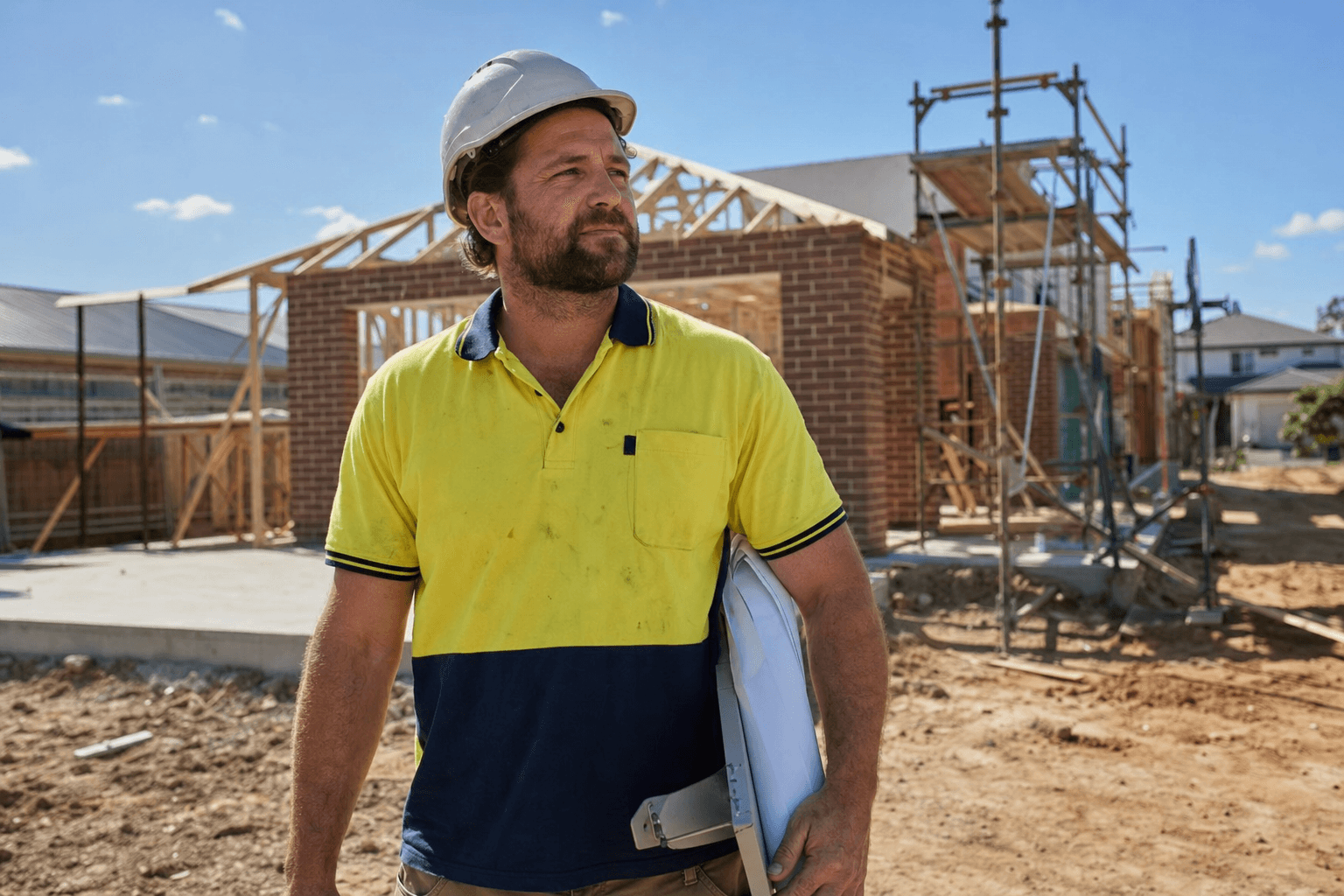
Three nationally recognised qualifications. Eight different licences. Here is exactly what the Cert IV, Diploma and Advanced Diploma let you build, and the builder licence each one unlocks in your state.
One academic ladder, three rungs, the same scope of work whether you study in Perth or Brisbane.
Three nationally recognised qualifications form the building and construction management ladder. The Certificate IV in Building and Construction (CPC40120) covers low-rise work, the Diploma of Building and Construction (Building) (CPC50220) covers medium-rise up to about three storeys, and the Advanced Diploma of Building and Construction (Management) (CPC60220) covers open and unlimited high-rise and commercial work. All three are listed as current on training.gov.au.
The capability each qualification represents does not move across borders. A Diploma means the same thing as a credential in every state. What moves is the licence it points at and the experience a regulator wants to see behind it. Get the codes right and the rest of this guide falls into place. If the building class terms are new to you, our NCC building classes guide explains Class 1 to Class 10 in plain language.
| Qualification | Code | AQF level | Scope of work |
|---|---|---|---|
| Certificate IV in Building and Construction | CPC40120 | AQF 4 | Low-rise: Class 1 and 10 to two storeys, Class 2-9 Type C |
| Diploma of Building and Construction (Building) | CPC50220 | AQF 5 | Medium-rise: up to around three storeys, Type B and C |
| Advanced Diploma of Building and Construction (Management) | CPC60220 | AQF 6 | Open and unlimited: all classes, Type A, high-rise |
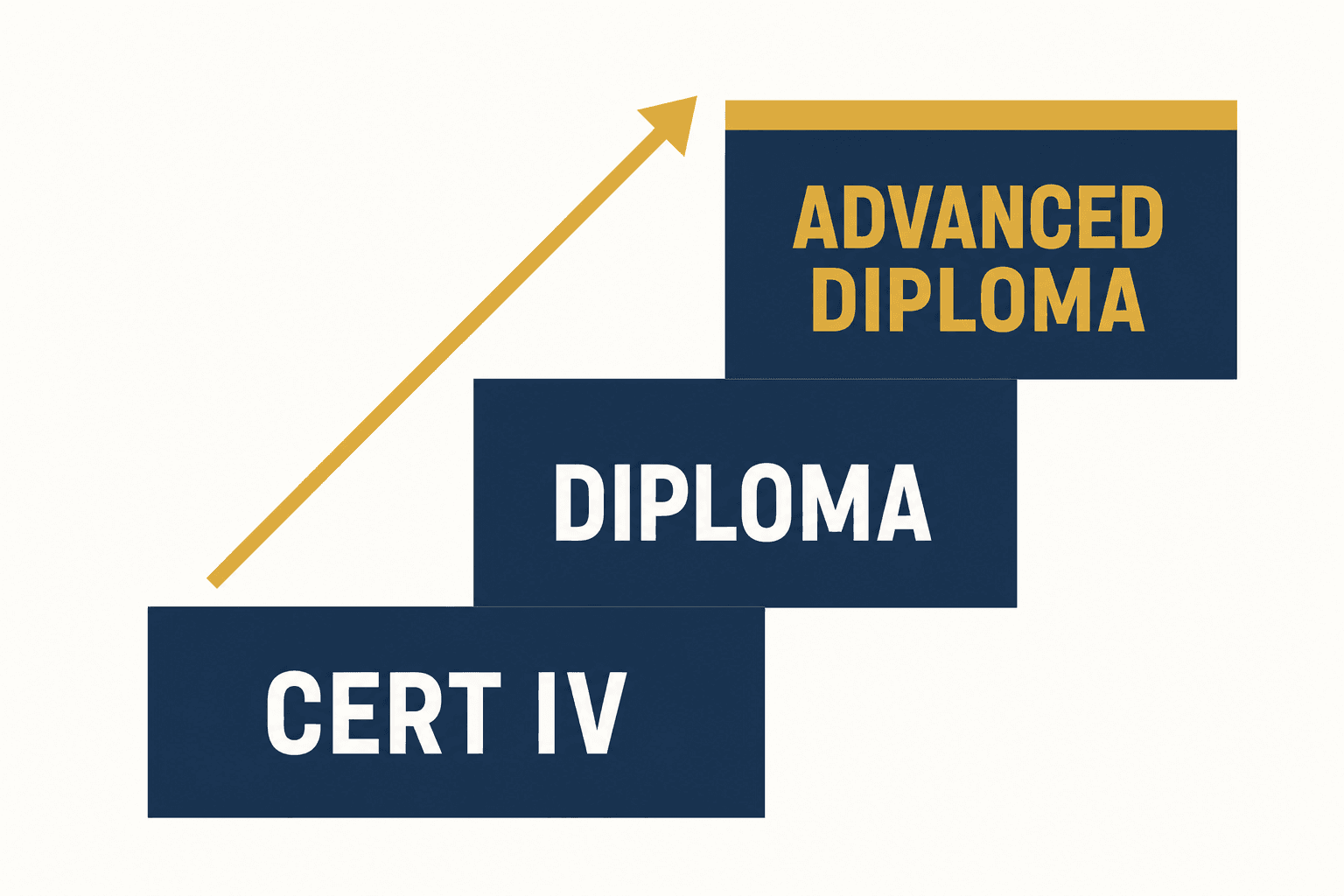
If you are weighing one rung against the next, our Certificate IV in Building and Construction and Diploma of Building and Construction course pages set out the units and study options for each, and the Advanced Diploma page covers the open-class management qualification.
The qualification is the nationally portable part. The licence is the locally issued part.
The qualification is the part that travels. A Certificate IV, Diploma or Advanced Diploma of Building and Construction is nationally recognised and accepted by every Australian regulator. The licence is the part that stays local: there is no national builder licence, so eight separate state and territory regulators each issue their own licence class with their own experience period and their own gatekeeping test on top of the same qualification.
In practice that means the course you need barely changes when you cross a border. The experience the regulator wants and the process it runs do. The CPC50220 Diploma points at a QBCC “Builder - Medium Rise” licence in Queensland, a general building licence in NSW with two years of experience inside the last ten, and a Set 1 registration in Western Australia that asks for seven years.
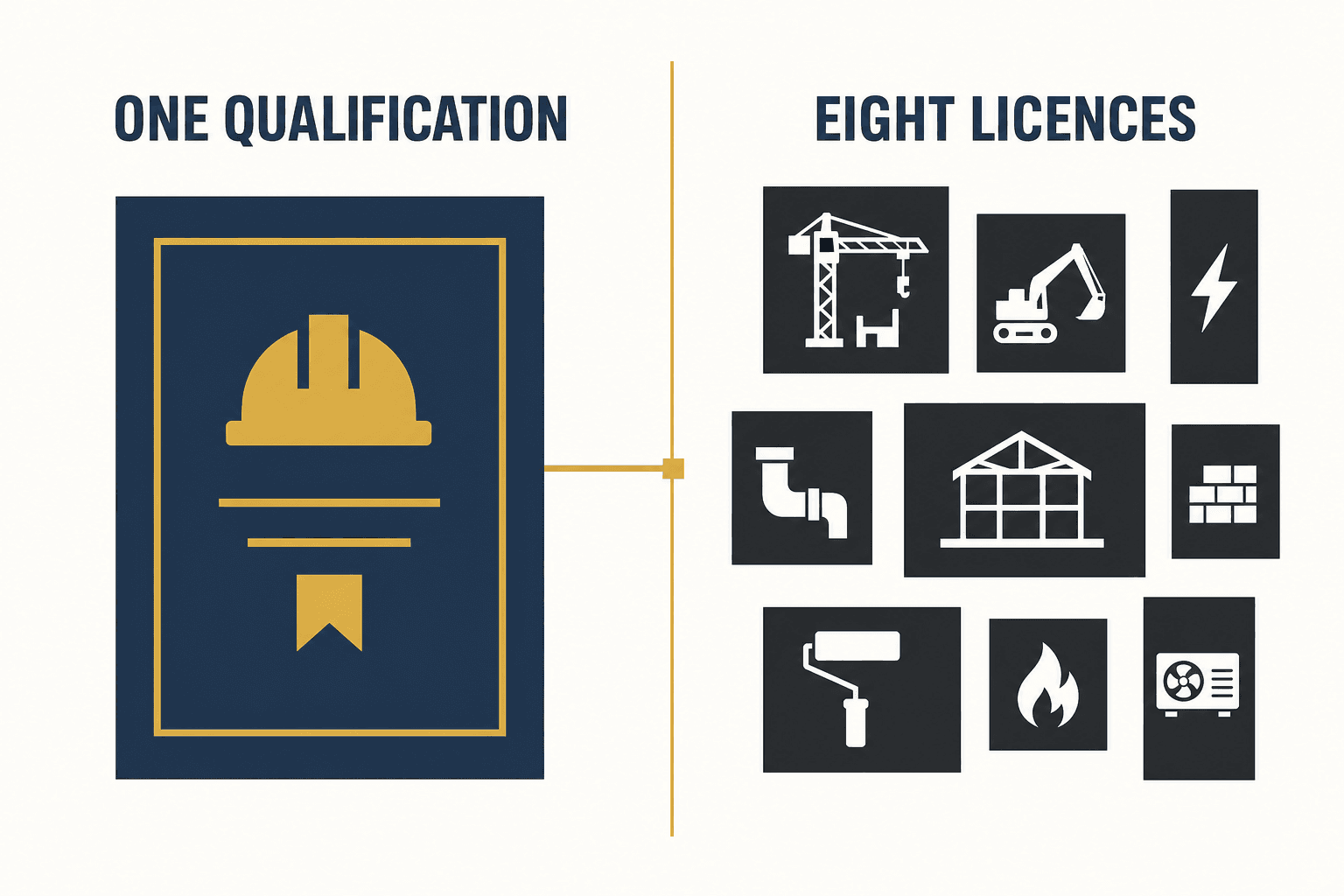
Holding a qualification is not the same as holding a licence. The qualification satisfies the education component. The licence still needs experience and a gatekeeping test, and a wrong assumption here is the difference between a valid application and a rejected one.
The same three qualifications held constant, overlaid against all eight regulators.
Each Australian state and territory has its own building regulator and its own builder licence classes. Queensland uses the QBCC, NSW the NSW Building Commission, Victoria the new Building and Plumbing Commission, South Australia Consumer and Business Services, Western Australia the Building Services Board, Tasmania CBOS, the ACT Access Canberra, and the Northern Territory the Building Practitioners Board. The matrix below maps each qualification to the licence it unlocks in every one.
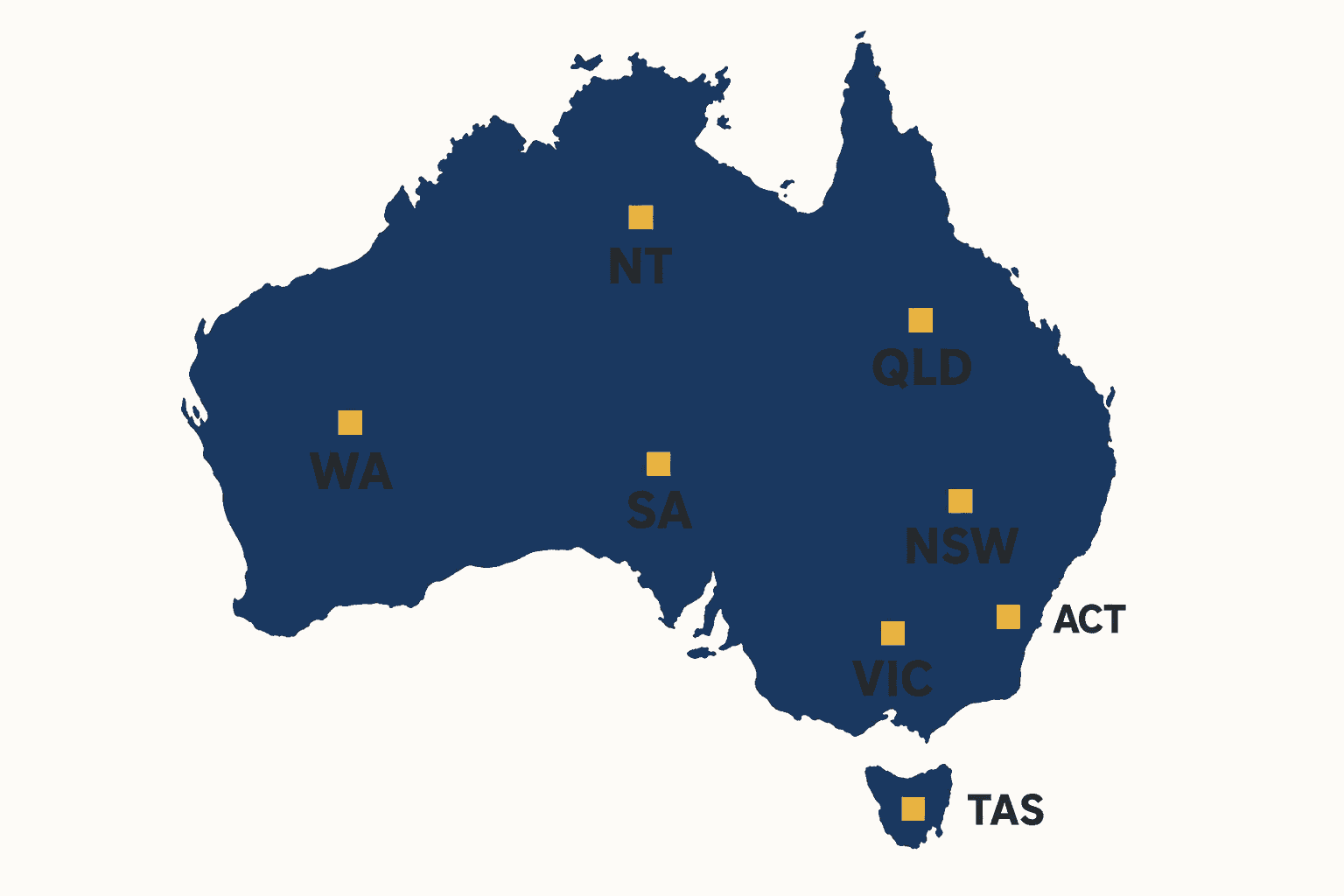
| State | Regulator | Cert IV (CPC40120) | Diploma (CPC50220) | Adv Dip (CPC60220) |
|---|---|---|---|---|
| QLD | QBCC | Builder - Low Rise | Builder - Medium Rise | Builder - Open |
| NSW | NSW Building Commission | General Building (Contractor) | Medium-rise condition | Higher / unlimited |
| VIC | Building & Plumbing Commission | Not prescribed (extra exam) | Domestic Builder Unlimited | Commercial Builder Unlimited |
| SA | Consumer & Business Services | Building Work Supervisor | Supervisor pathway | Conditions, not clean tiers |
| WA | Building Services Board | Not the anchor | Registered Builder (Set 1) | Not the anchor |
| TAS | CBOS | Builder - Domestic / Low Rise | Builder - Medium Rise | Builder - Open |
| ACT | Access Canberra | Class C (Low Rise) | Class B (Medium Rise) | Class A (Unlimited) |
| NT | Building Practitioners Board | Residential Restricted and Unrestricted | Commercial (experience-led) | Commercial (experience-led) |
| State | Experience | Gatekeeping test |
|---|---|---|
| QLD | 2yr (trade) / 4yr (no trade) | Net-asset test for contractors; home-warranty insurance |
| NSW | 2yr within the last 10yr | Home building compensation cover; no net-asset test, no written exam |
| VIC | DB-L 2yr / DB-U 3yr | BPC exam; domestic building insurance |
| SA | 4yr (apprenticeship) / 5yr (Cert IV) | Around $10k net assets (contractor); technical interview (supervisor) |
| WA | 5yr / 7yr by Set | Board exams or RTO RPL assessment (Set 4 / 5) |
| TAS | 2yr-4yr; 3yr-6yr for Open | Indemnity insurance and CPD; no exam, no net-asset test |
| ACT | 2yr, at least 1yr post-qualification | 80% pass on a written exam for Classes A, B and C |
| NT | 3yr, 1yr in the NT, within 10yr | $50k net tangible assets; fit-and-proper check |
Net-asset floors such as roughly $10,000 in South Australia, around $12,000 in Queensland and $50,000 in the Northern Territory are floors that scale with turnover, not fixed national numbers. Always confirm the current figure with your regulator before you apply, because the full scaling tables sit behind each authority’s financial-requirements policy.
For the state-specific detail behind these rows, our QBCC licence guide, NSW builder licence guide and How to Become a Builder in Australia guide walk through each application in order. Every state and territory guide is listed below.
Each regulator sets its own qualification, experience and fee rules. Pick a state to see the full guide.
Not sure where to start? Read the national builders licence guide for a side-by-side summary of every state, or check whether RPL can fast-track your qualification.
The clean Cert IV equals low-rise rule is true in five jurisdictions and breaks in two, in opposite directions.
The tidy “Cert IV equals low-rise, Diploma equals medium, Advanced Diploma equals open” rule holds cleanly in Queensland, Tasmania and the ACT and broadly in NSW and South Australia. Two jurisdictions break it. In Victoria the Certificate IV is not a prescribed course for any builder class. In the Northern Territory the Certificate IV covers residential building right up to the unrestricted class. A reader who assumes one course means one licence everywhere is wrong on both counts.

Victoria’s outlier status has a moving part too. The Victorian Building Authority was absorbed into the Building and Plumbing Commission on 1 July 2025, and the BPC online-exam transition is due to complete around mid-2026, so confirm the current exam logistics directly. Our Victorian builder registration guide carries the ladder-break detail in full.
Both routes end at the same nationally recognised qualification.
There are two ways into a building qualification, and they end at the same place. A no-experience entrant takes the study-first route, completing the Certificate IV or Diploma through coursework and then building the supervised experience their state requires. An experienced tradie takes the Recognition of Prior Learning route, where an assessor converts documented on-the-tools experience directly into the same qualification without classroom re-study. Both produce an identical, nationally recognised certificate. If you already have the years on site, start with a free RPL eligibility check.
Certificate IV (CPC40120) for low-rise, Diploma (CPC50220) for medium-rise, or Advanced Diploma (CPC60220) for open and unlimited work.
Study first if you are new to the industry, or use RPL if you already have years of documented experience on the tools.
Accumulate the supervised experience your regulator asks for, between two and seven years depending on the jurisdiction and class.
Check the matrix for your regulator, the class your qualification unlocks, and any net-asset test, insurance, written exam or interview.
Lodge your application with the relevant building authority, attaching your qualification, experience evidence and financial documents.
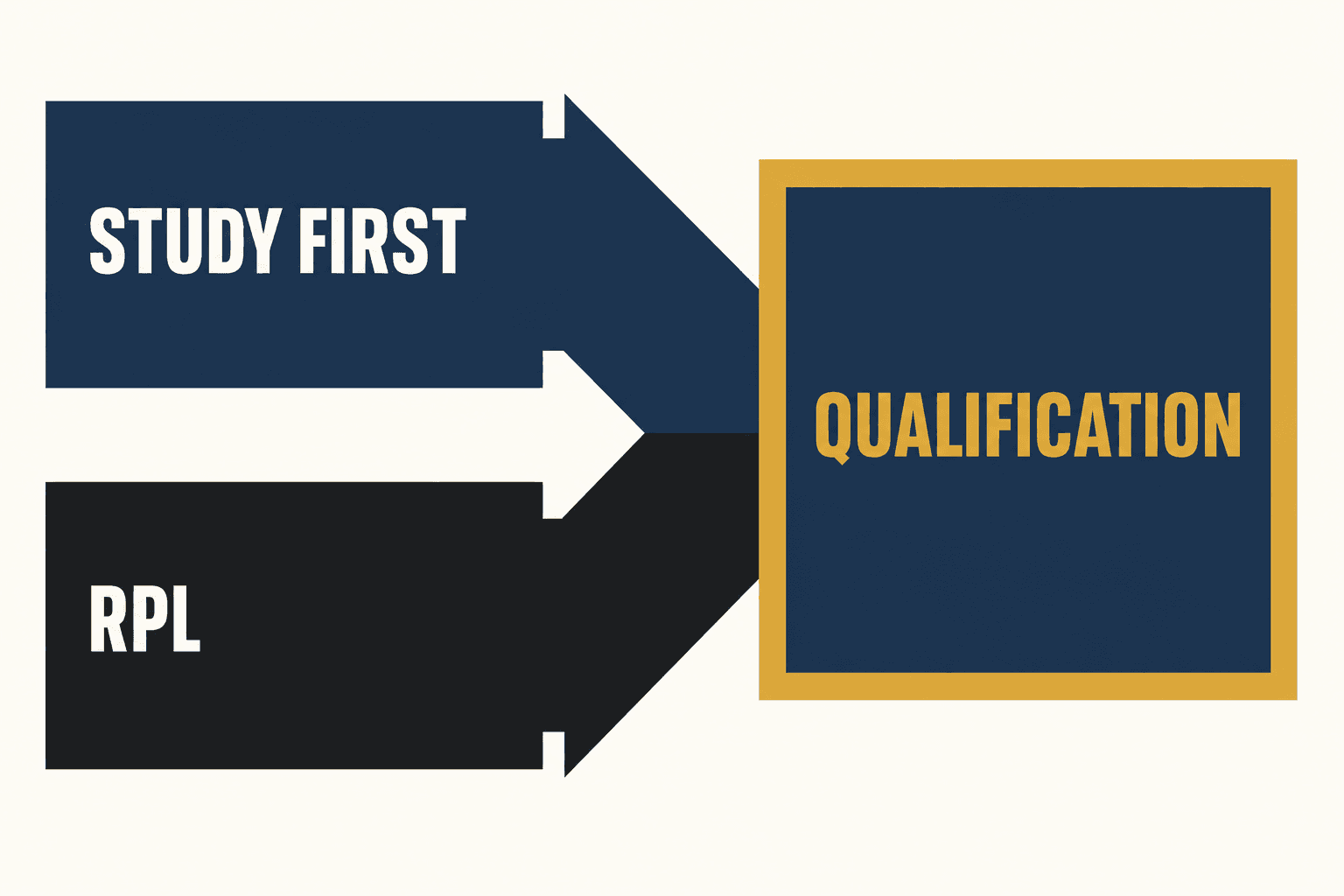
RPL is an assessment, not a course. Your years of documented work, site photos, payslips and reference letters feed directly into an evidence portfolio that an assessor maps against the units of the Certificate IV or Diploma. Every regulator accepts an RPL-derived qualification identically to a studied one, and Western Australia goes furthest by naming RTO RPL assessment as a formal Set 4 registration route equal to the Diploma in its own regulations.

If you have been on the tools for years, the RPL for building and construction guide explains how to gather evidence, and the Certificate IV course page shows how RPL can shorten the path to a low-rise builder licence.
This guide is general information about nationally recognised qualifications and the licence classes they can contribute to. Licence class names, experience periods and fees are set by each state and territory regulator and change over time. Always confirm current requirements with your relevant building authority before applying, and remember that holding a qualification does not by itself guarantee a licence.
The questions tradies and career-changers ask most about building qualifications and builder licensing.
These nationally recognised qualifications meet the licensing requirements discussed in this guide.
CPC40120 - CPC40120 - Nationally recognised building and construction training for builders, site supervisors and construction managers.
CPC50220 - CPC50220 - Nationally recognised building and construction training for experienced builders, site managers and construction professionals.

CPC60220 - CPC60220 - Advanced building and construction management for experienced professionals working with large and complex projects.
Each state has unique builder licensing requirements. Explore our other guides to compare.
The definitive guide to becoming a licensed builder in Australia — qualifications from Cert IV to Advanced Diploma, state-by-state licensing requirements for all 8 states and territories, experience needs, costs, timelines, and salary expectations.
Read Article
The complete 2026 guide to Recognition of Prior Learning for construction professionals — step-by-step process, evidence requirements, costs from $500, 4-8 week timeframes, all 8 states accept RPL qualifications, and why 770,000 construction workers could benefit from RPL.
Read Article
Three licence classes, three qualifications, one clear pathway. Low Rise, Medium Rise, and Open builder licences explained — qualifications, fees, experience, financial requirements, and the step-by-step application process.
Read Article
Everything you need to know about obtaining your builder's licence in NSW - qualifications, experience, fees, and the step-by-step application process.
Read Article
The complete guide to becoming a registered builder in Victoria — domestic and commercial pathways, qualifications (including the Cert IV shortcut), BPC exams, fees, insurance, and the 2025 regulatory reforms.
Read ArticleSpeak to an advisor about the right building qualification for your goal, whether you study first or fast-track with RPL. Nationally recognised, 100% online, flexible study around your work.