QLDVICSATASNTACT
Building
Certificate IV in Building and Construction
CPC40120 - CPC40120 - Nationally recognised building and construction training for builders, site supervisors and construction managers.

A construction-first guide to your rights and a safe return: suitable duties on site, who can sack you on workers’ comp by state, and how to use the downtime off the tools.
The barrier is structural, not attitudinal.
Returning to work in construction is harder than in most industries for structural reasons, not attitude. Construction is the second-largest source of serious workers’ compensation claims in Australia, around 17,600 a year, the injuries are mostly musculoskeletal, and a live building site is built around full-capacity bodies. About 99% of construction businesses are small subcontractors with nowhere obvious to redeploy an injured worker.
The numbers tell the story. Body stressing and manual handling are the leading injury mechanism, followed by falls, slips and trips, then being hit by moving objects. Labourers alone account for 22.9% of serious claims while making up just 8.4% of jobs, and construction carries 45% of all fall-from-height worker deaths. The median construction worker is off about 8.4 weeks, a fair bit longer than the 7.0-week all-industry median.
Here is the catch that makes construction unique. The work that caused the injury is often the only work visibly available on site, and the worksite itself changes week to week, so there is no permanent sedentary station to fall back on. A thoughtful return needs genuine job redesign, not make-work. That is the whole challenge in one sentence.
You will see construction quoted at both 12% and around 18%. They measure different things. The 12% is construction’s share of serious workers’ compensation claims (Safe Work Australia administrative data). The higher figure is from the ABS survey of all self-reported work injuries among men, which includes minor and uncompensated injuries. When the share matters, the 12% serious-claims figure is the one to use.
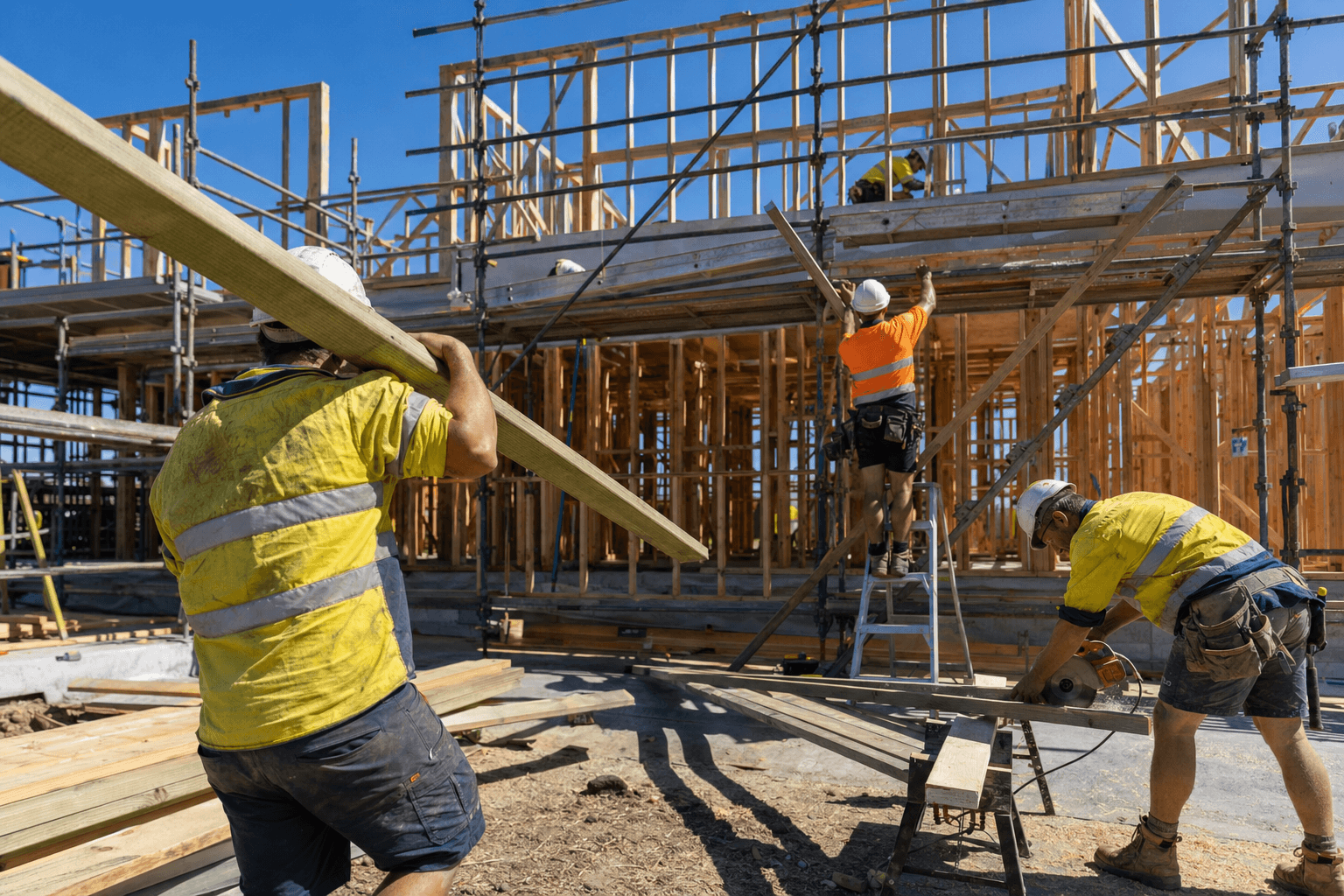
“Construction is a very physically demanding industry and one where small employers will often feel that recovering at work after an incident is impossible.”
WHS keeps the return safe. Workers’ comp runs the claim.
After a site injury, two separate laws run at the same time and must never be confused. Work health and safety law, the harmonised model WHS Act in most states, keeps the modified return safe and sits with the business (the PCBU) and your supervisor. Your state’s workers’ compensation Act, a different Act and a different regulator in every jurisdiction, manages the claim, your entitlements and the return-to-work plan.
No competitor guide explains both at once, which is exactly why injured tradies get confused about who is responsible for what. Keep them straight and the whole process makes sense. The supervisor and the business handle safety on site under WHS law. The insurer and the return-to-work coordinator handle the claim, your wages and the plan under your state’s comp scheme.
Genuine modified work, not invented busywork.
Suitable duties on a construction site are genuine modified tasks within your medical capacity that the business actually needs done, such as set-out checks, QA inspection, estimating, scheduling, supervising or workshop assembly. The test is simple: would this task need doing even if you weren’t injured? If yes, it is genuine. If it is invented busywork like sweeping a clean floor, it is not, and it can be challenged.
The doctor sets the capacity, the supervisor finds the work, the return-to-work coordinator weaves it into the plan, and you have a say. The table below is an idea bank by trade and injury, drawn from how regulators and rehab providers describe real modified duties. It is a starting point for the conversation, not a prescription.
| Trade | Lower-back injury | Shoulder injury | Knee injury |
|---|---|---|---|
| Carpenter | Set-out and measurements, QA and defect inspection, take-offs, estimating, scheduling | Ground-level set-out checks, QA of finished work, plans and specs review | Estimating and take-offs (seated), quoting, ordering |
| Electrician | Workshop switchboard assembly, testing low-level circuits, quoting | Low-level fit-off, testing, workshop assembly, estimating | Workshop assembly, testing and certification, supervising apprentices |
| Concreter | Pour supervision (directing, not lifting), formwork and steel QA, scheduling | Pour supervision, laser level checks, set-out, ordering | Ground-level pour supervision, scheduling, cured-surface QA |
| Bricklayer | Set-out, plumb and level QA, toolbox talks, take-offs | Pin-and-line set-out, crew supervision, mortar-mix QA, estimating | Estimating, ordering, ground-level supervision |
| Labourer | Traffic management (if certified), perimeter checks, materials sorting, inductions | Traffic management, barricade checks, induction supervision | Seated or standing admin, material labelling, traffic control |

A 22-year-old Sydney electrician fell three metres through an unprotected stair void and sustained life-threatening head injuries. Eight months on, his employer, insurer and treating doctor co-designed a four-phase return that started nowhere near the site. It worked, and he reported his physical and mental wellbeing improving as the modified work resumed.
The written map of your graduated return.
A return-to-work plan is the written agreement that maps your graduated return: your medical capacity, the suitable duties you’ll do, your hours and your review dates. A return-to-work coordinator builds and runs it. Whether your employer must appoint one depends on size and state, from South Australia’s 30-worker trigger to Victoria, where practically every employer must, with continuous appointment above about $2.97m in remuneration.
The process is the same wherever you are, even if the names differ (WorkCover, icare, WorkSafe, ReturnToWorkSA). Follow these steps in order and you protect both your claim and your recovery.
| State | Requirement |
|---|---|
| New South Wales | Category 1 employers (basic tariff premium over a threshold) must appoint a trained coordinator |
| Victoria | Practically every employer; continuous appointment required above about $2.97m in rateable remuneration |
| South Australia | Required at 30 or more workers |
| Queensland | Insurer-driven rehabilitation and return-to-work duties; accredited programs for eligible employers |
| WA and others | A documented injury-management or return-to-work program rather than a named coordinator |
A state-by-state patchwork, plus a national myth to bust.
You can be dismissed while on workers’ compensation for a valid reason unrelated to your claim, such as a genuine redundancy, but every state limits sacking you because of the injury for a set period. There is no single national rule. Queensland, Tasmania and Western Australia hold your pre-injury job for 12 months, New South Wales for 6 months, Victoria for 52 weeks, and South Australia for as long as is reasonably practicable.
This is the single biggest area of confusion, and most guides are siloed to one state. The table below maps the whole country, with the key section of each Act so you can read it yourself.
| Where | How long your job is protected | Law (key section) |
|---|---|---|
| Queensland | 12 months | Workers’ Compensation and Rehabilitation Act 2003, s232B |
| New South Wales | 6 months, then a 2-year reinstatement window | Workers Compensation Act 1987, s248 |
| Victoria | 52 weeks (the employment obligation period) | WIRC Act 2013, s104 |
| Tasmania | 12 months | Workers Rehabilitation and Compensation Act 1988, s143L |
| Western Australia | 12 months from first date of incapacity | Workers Compensation and Injury Management Act 2023 |
| South Australia | No fixed clock: suitable employment so far as reasonably practicable | Return to Work Act 2014, s18 |
| Australia-wide (Fair Work) | Up to 3 months only, and it does NOT extend on comp | Fair Work Act 2009, s352 + reg 3.01 |
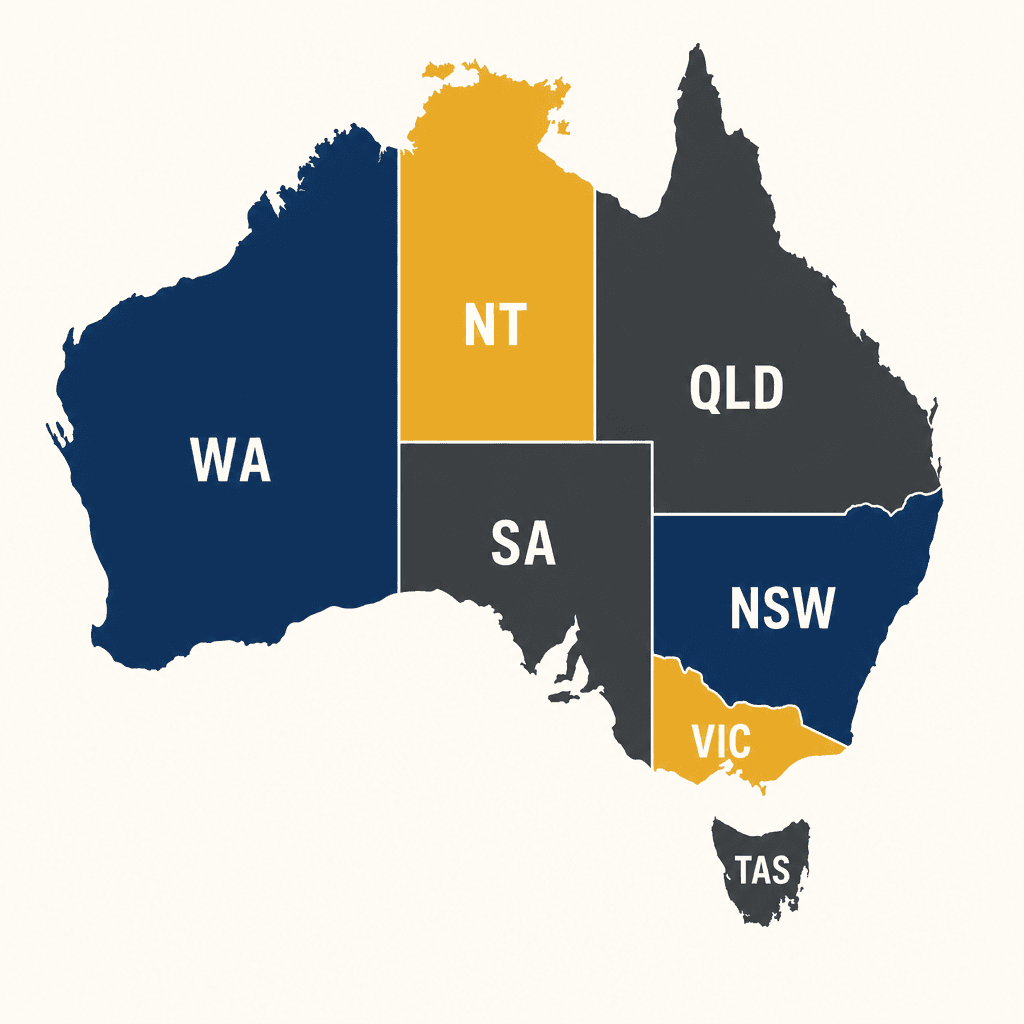
A widespread myth says the Fair Work Act protects your job for as long as you are on workers’ comp, or that comp time pauses the clock. That is the reverse of the law. The Fair Work Act (s352) only protects a temporary absence of up to 3 months (or absences totalling 3 months in a year), and Fair Work Regulations reg 3.01(6) makes clear that time on workers’ compensation is not paid personal or carer’s leave, so it does not extend the protection. Do not rely on the Fair Work Act for long-term job security while on comp. Your real long-term shield is your state workers’ comp Act.
Read the primary sources for yourself: Qld WCRA s232B, NSW WC Act s248, and Fair Work Regulations reg 3.01.
This article is general information, not legal, financial or medical advice. Workers’ compensation and job-protection rules differ in every state and territory and change over time. Check your state regulator and seek advice for your own situation, especially if you are facing a disputed dismissal.
The deemed-worker test nobody explains for construction.
Subcontractors and sole traders are the most exposed group. A sole trader with no employees generally cannot claim workers’ compensation, because they are not their own worker, so their safety net is private income protection or total and permanent disability cover, which most do not carry. The one escape hatch is the deemed-worker test: if you ABN to one main builder, you may be covered.
Most construction subbies invoicing one main builder fit exactly that profile, and almost nobody has written this paragraph for them. In NSW, a contractor who earns at least around 80% of their income from one principal over the prior 12 months may be a deemed worker covered by that principal’s policy. The exact test varies by state, so confirm with your regulator before you assume you are or aren’t covered.

First, whether you might be a deemed worker of the builder you invoice most (the income test). Second, whether you hold private income protection or TPD cover, and its waiting period (often 30 to 90 days). Third, whether your main builder’s insurer should be notified if you are hurt on their site. Getting this wrong before an injury is the most expensive mistake a sole trader makes.
Injury amplifies a crisis that already runs through construction.
Being taken off the tools amplifies a mental-health crisis that already runs through construction. Australian construction workers are six times more likely to die by suicide than from a worksite accident, and male construction workers are 53% more likely than other working men. Injury deepens isolation, and a 2024 University of Western Australia study found loneliness is the single strongest predictor of suicidal ideation in the industry.
An injured tradie at home is acutely isolated, cut off from the crew, the routine and the identity that came with the work. That is why recovery needs deliberate social connection, not just a capacity certificate. Stay in the loop with your crew, keep a routine, and reach out early. Sometimes structured activity, including study, is part of staying well, not a distraction from it.
“For a person experiencing a tough time, sometimes work is the best place for them to be.”

If you or a mate are struggling, these lines are free and confidential. MATES in Construction 1300 642 111. Lifeline 13 11 14. OzHelp 1300 694 357. TIACS 0488 846 988. Incolink 1300 000 129. In an emergency, call 000.
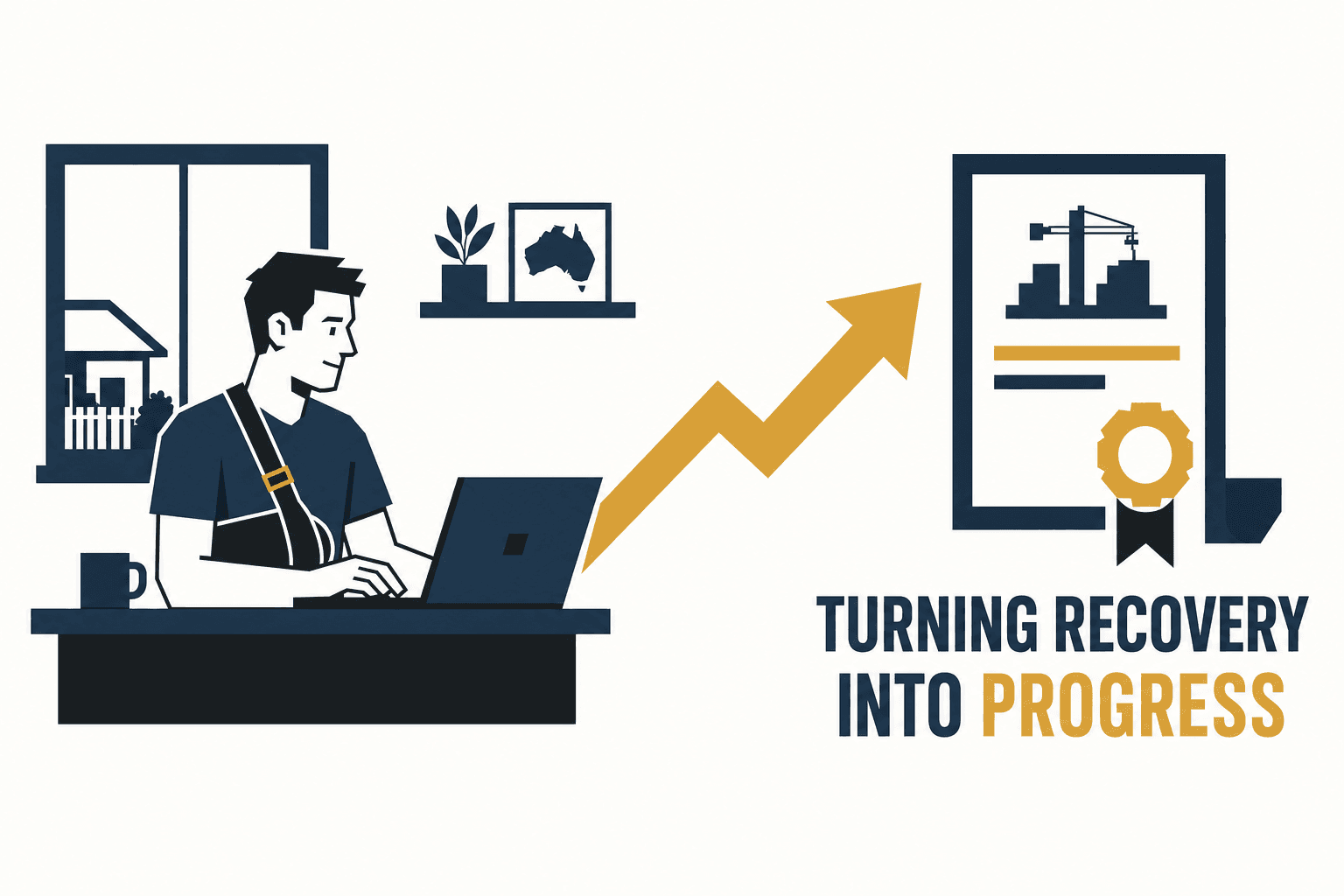
A system-endorsed way to turn time off into a qualification.
Recovery downtime off the tools can be a genuine, well-timed window to study online and use Recognition of Prior Learning to convert years of site experience into a nationally recognised building and construction qualification. This is not a stretch: workers’ compensation schemes explicitly list education and training as a covered support activity during recovery, and the supervising and estimating roles a qualification opens up mirror the suitable duties a good plan reaches for.
Think about how the threads tie together. The suitable duties that keep you productive on a modified plan, set-out, QA, estimating, scheduling, supervising, are the same skills a Certificate IV in Building and Construction (CPC40120) and a Diploma of Building and Construction (CPC50220) formalise. If you are an experienced tradie, RPL can fast-track recognition of what you already do, and the Advanced Diploma of Building and Construction is the senior-management step beyond that.

For the full map of which qualification unlocks which builder licence in each state, see our guide to building qualifications by state, or browse all building and construction courses.
Straight answers to the questions injured construction workers ask most.
These nationally recognised qualifications meet the licensing requirements discussed in this guide.
CPC40120 - CPC40120 - Nationally recognised building and construction training for builders, site supervisors and construction managers.
CPC50220 - CPC50220 - Nationally recognised building and construction training for experienced builders, site managers and construction professionals.

CPC60220 - CPC60220 - Advanced building and construction management for experienced professionals working with large and complex projects.
Each state has unique builder licensing requirements. Explore our other guides to compare.

One national guide that holds the three CPC building and construction qualifications constant and overlays the builder licence each unlocks in all eight states and territories. Covers the study-first and RPL routes, the experience years by state, and the two places the rule of thumb breaks (Victoria and the NT).
Read Article
The complete 2026 guide to Recognition of Prior Learning for construction professionals — step-by-step process, evidence requirements, costs from $500, 4-8 week timeframes, all 8 states accept RPL qualifications, and why 770,000 construction workers could benefit from RPL.
Read Article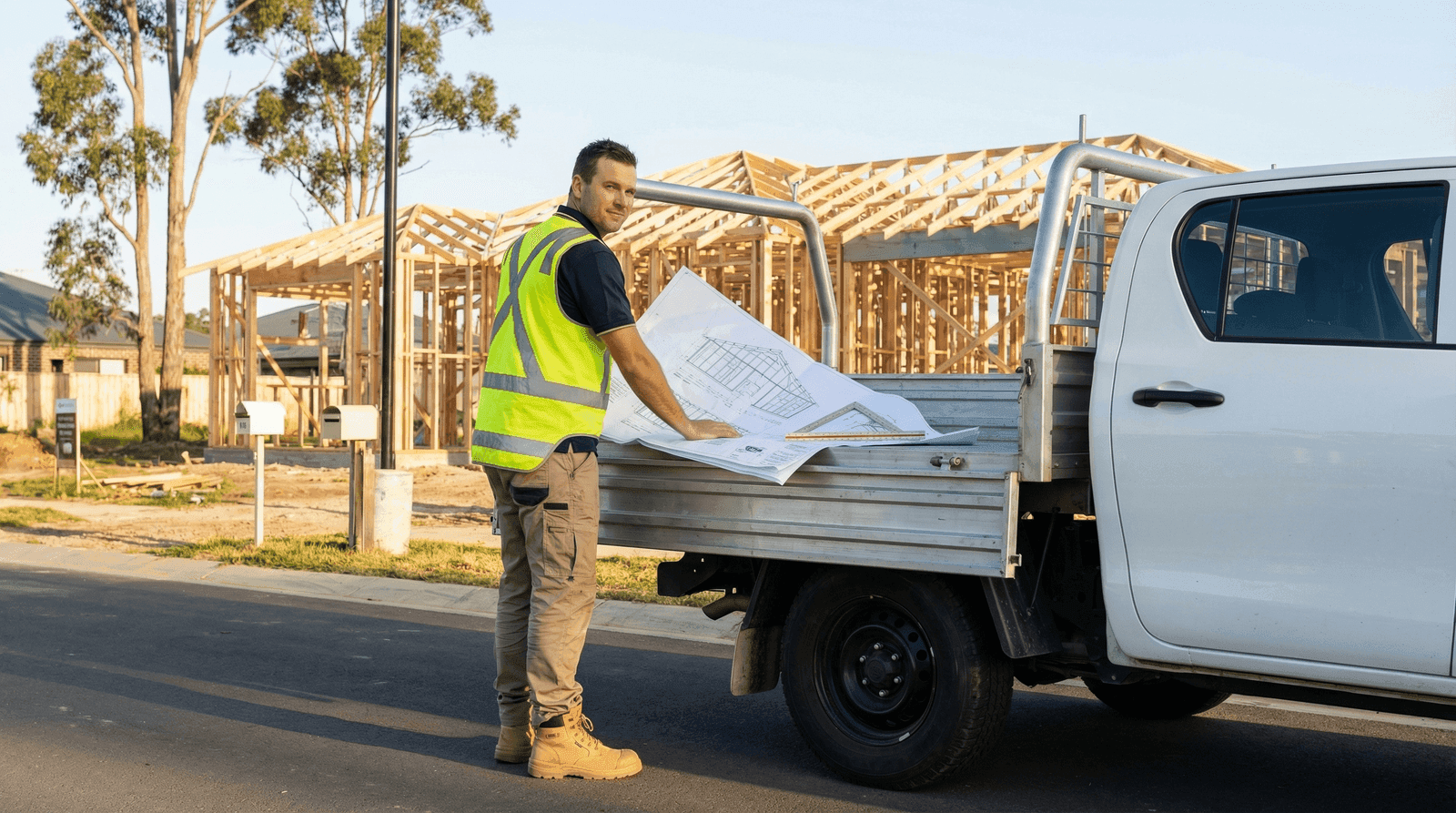
Everything you need to start a tradie business in Australia — from ABN registration and insurance to pricing strategies, finding clients, and growing from sole operator to building company. Construction-specific regulatory expertise from RTO 45384.
Read Article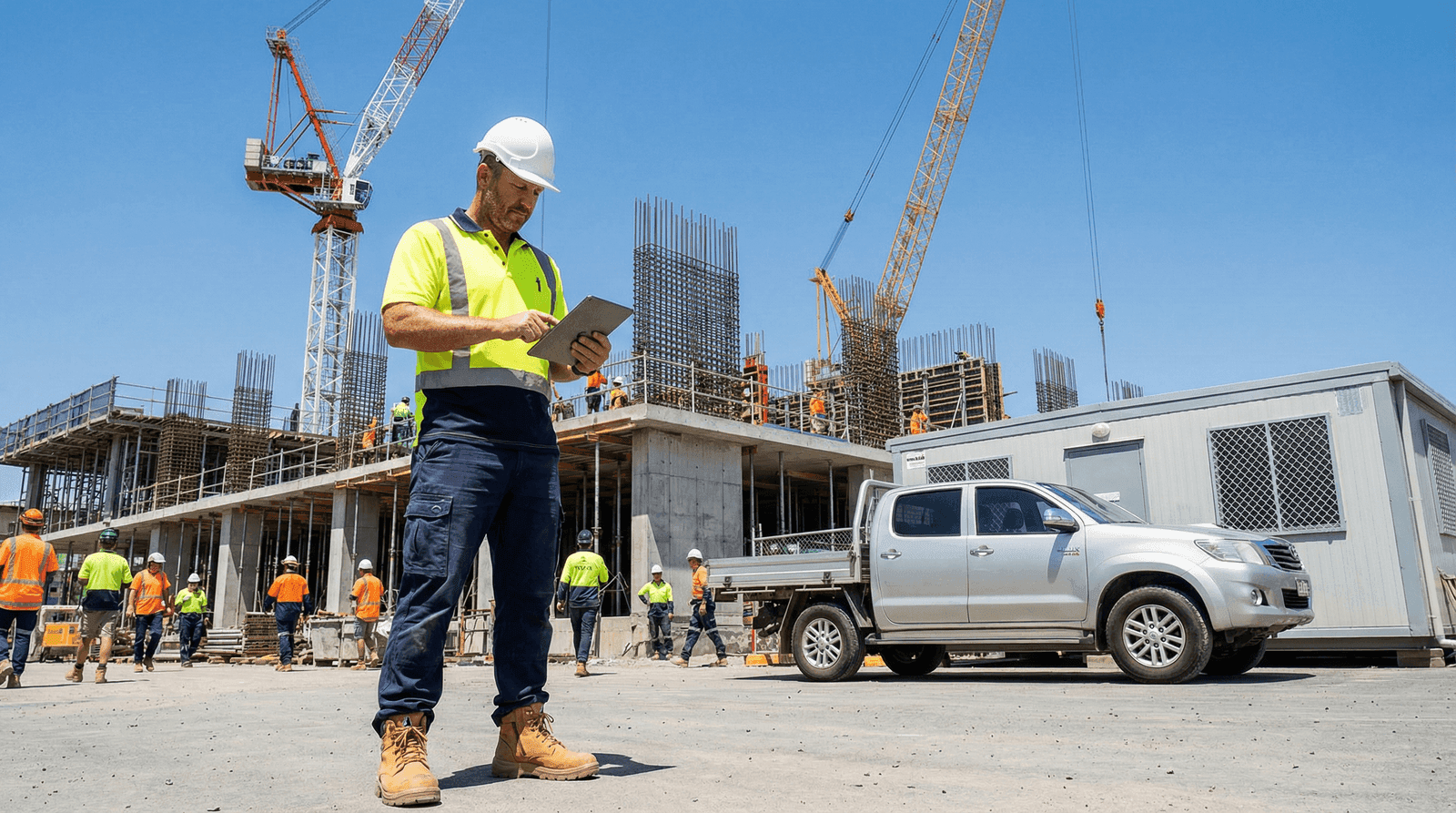
The complete 2026 guide to Australian construction salaries — site supervisors earning $130,000+, project managers at $190,000+, and directors commanding $350,000+. Covers every qualification level from Certificate IV to Advanced Diploma, plus WHS, estimating, and contract administration roles.
Read Article
The definitive guide to becoming a licensed builder in Australia — qualifications from Cert IV to Advanced Diploma, state-by-state licensing requirements for all 8 states and territories, experience needs, costs, timelines, and salary expectations.
Read ArticleIf you are recovering and weighing up a Certificate IV, Diploma or RPL pathway, speak to an advisor for honest, no-obligation advice about the right fit for your trade and timing.