QLDVICSATASNTACT
Building
Certificate IV in Building and Construction
CPC40120 - CPC40120 - Nationally recognised building and construction training for builders, site supervisors and construction managers.
A current-to-2026, state-aware guide to writing a site-specific Safe Work Method Statement for high risk construction work, with seven steps that mirror our free draft generator.
A SWMS is required only for high risk construction work.
A Safe Work Method Statement is legally required only for high risk construction work, and it must exist before that work starts. Regulation 291 of the model WHS Regulations lists 18 categories of high risk construction work, and Victoria lists 19 under its own OHS Regulations 2017. If at least one category applies to your job, you need a SWMS. If none apply, a SWMS is not legally required, though the general duty to manage risk still is.
This is the gate that decides everything else. The 18 model categories cover the work that kills and maims people most often: any risk of a fall of more than 2 metres, work on or near energised electrical installations, work in or near a trench or shaft deeper than 1.5 metres, demolition of load-bearing structure, work near mobile plant, asbestos, confined spaces, and more. Victoria splits trench and tunnel work into two separate categories and covers any demolition rather than only load-bearing demolition, which is why its list runs to 19.
Why does it matter enough to get right? Construction was Australia’s third-deadliest industry in 2024, with 37 worker deaths, one in five of all workplace deaths that year, according to Safe Work Australia. The same body reports that construction accounts for roughly 45% of all falls-from-height worker deaths. Regulators enforce it hard. In a single 2025 operation, SafeWork NSW issued 506 non-compliance notices, 192 of them for work at heights, and WorkSafe Victoria fined 52 employers a combined $3.74 million for working-at-height breaches in 2025 alone.
This guide is general information for the Australian construction industry, not professional safety or legal advice. A SWMS must be made site-specific and prepared in consultation with the workers doing the work. If you are unsure, contact your state or territory WHS regulator or a qualified WHS professional. Read the model framework at Safe Work Australia.
Four content elements under regulation 299, plus a fall rule.
Under regulation 299(2) of the model WHS Regulations, a SWMS must do four things: identify the high risk construction work; state the hazards and the risks each one creates; describe the control measures; and describe how those control measures are implemented, monitored and reviewed. It must be set out in a way that is readily accessible and understandable to the people who use it (regulation 299(3)).
A risk score or matrix is not one of the four elements. The law wants concrete controls, not a colour-coded number. The four elements are what an inspector reads against, so write them plainly for each task step.
That fifth line is the one almost no template covers. Regulation 299(4) says that where a SWMS deals with a risk of falling more than 2 metres and relies only on administrative controls or PPE, it must also describe the higher-order controls that were considered. In plain terms: if you are going to work at height on a harness alone, you have to show you thought about edge protection or a scaffold first. You can start your SWMS draft in the free tool and fill these elements in for your own trade.
A repeatable sequence that mirrors the free tool’s wizard.
To write a SWMS, work through seven steps in order: enter your business and project details; identify which high risk construction work applies; break the job into task steps; list the hazards and risks for each step; choose controls in hierarchy-of-controls order; set out how the controls are monitored and reviewed; then consult your workers and complete the sign-on. These seven steps are the same steps our free SWMS generator walks you through.
Follow them in sequence and the four regulation 299 elements fall out naturally. Our free tool turns these seven steps into an editable starting document for your trade, so you are editing a draft rather than staring at a blank page.
Record your jurisdiction, business, the site address, the work description and who prepared it. Forcing site-specific notes from the first field is what stops a SWMS being generic.
Check the job against the 18 model categories (reg 291), or Victoria’s 19, and name each one that applies. This is the legal gate for the whole document.
List the real steps in the order you will actually do the work, for example set-out, edge protection, install, detailing.
For each step, state the hazard and the harm it can cause. Keep it specific to this site and this task.
Eliminate first (reg 35), then substitute, isolate or engineer, then administrative controls, then PPE last (reg 36).
Describe who checks each control and when, and note the review triggers in reg 38(2). Add the stop rule for when work stops.
Walk the crew through the SWMS before work starts, capture the discussion, and record the sign-on. Signing is not the same as consulting.
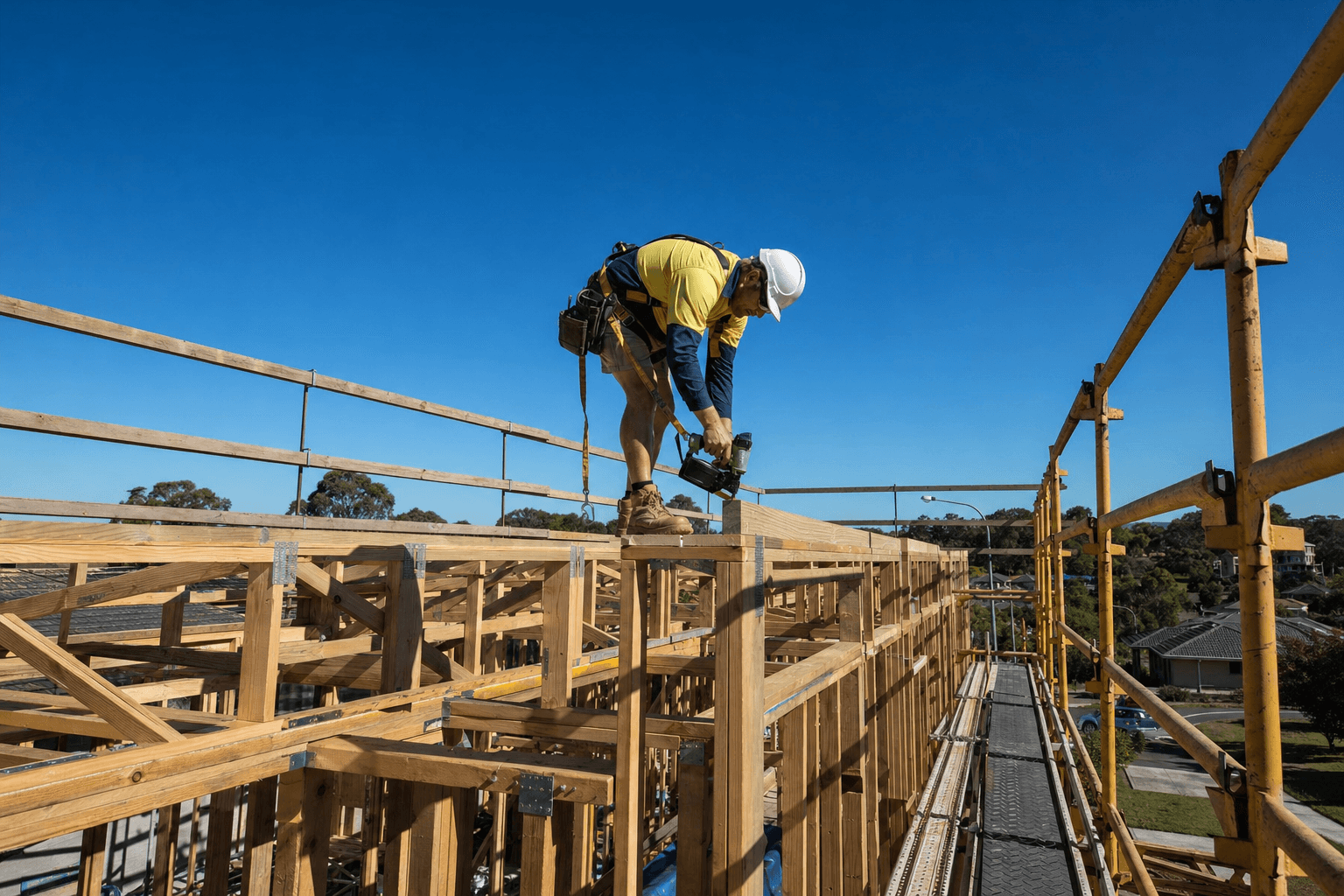
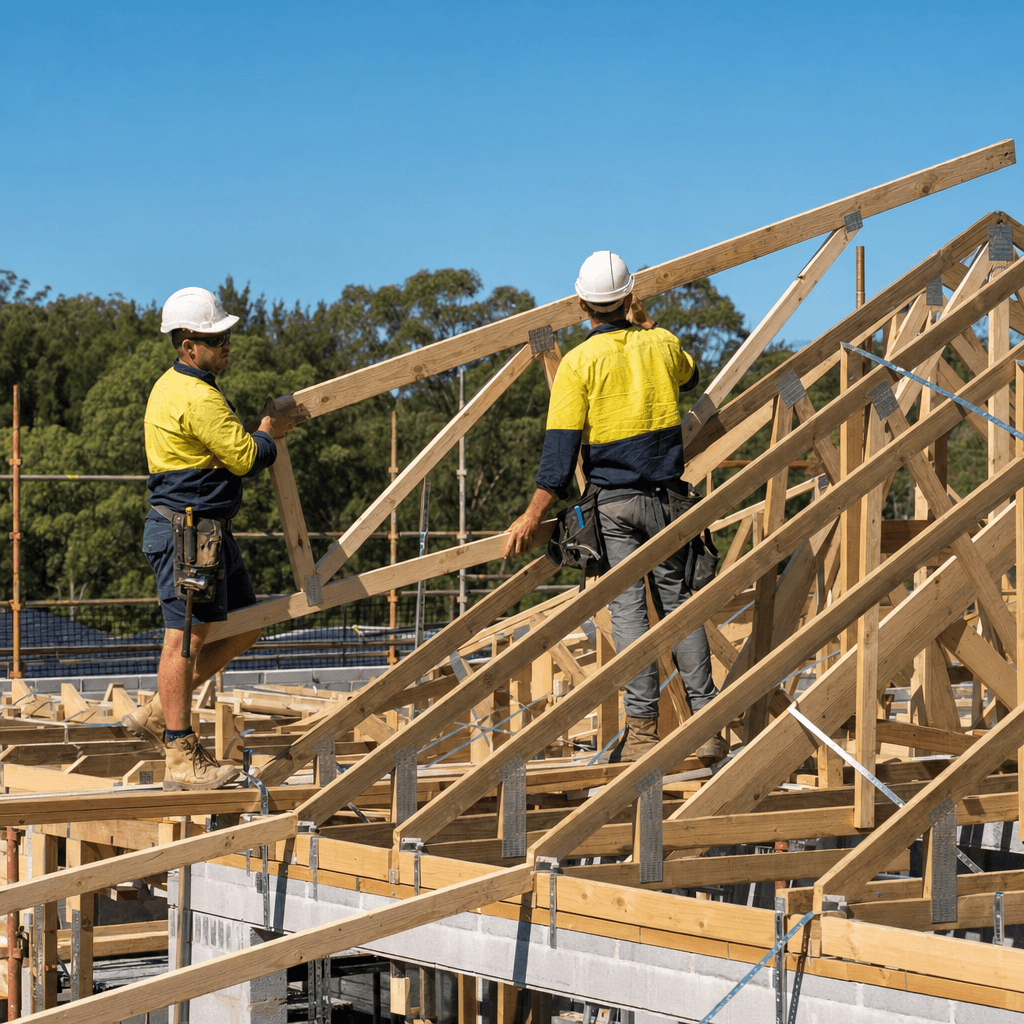
The best way to see how this works is to map a real job to the four regulation 299 elements. Take roof truss installation, where the trigger is a fall of more than 2 metres from the top plate. The table below is that job written the way the law wants it. You can build a site-specific first draft with the free SWMS generator and shape it around your own build.
| Reg 299(2) element | What it means | Roof truss install example |
|---|---|---|
| (a) Identify the HRCW | Name the high risk work | Working where a person could fall more than 2 metres from the top plate |
| (b) Hazards and risks | The hazard and the harm | Fall from height (death or serious injury); trusses collapsing before permanent bracing (crush); a craned truss swinging or dropping |
| (c) Control measures | Controls in hierarchy order | Prefabricate bracing at ground level; edge protection or scaffold before install; fix each truss progressively with temporary ties; barricade the drop zone; harness to a rated anchor as a last resort |
| (d) Implement, monitor, review | Who checks, when, the stop rule | Supervisor inspects edge protection and bracing before roof work each day and after wind; work stops if edge protection is incomplete |
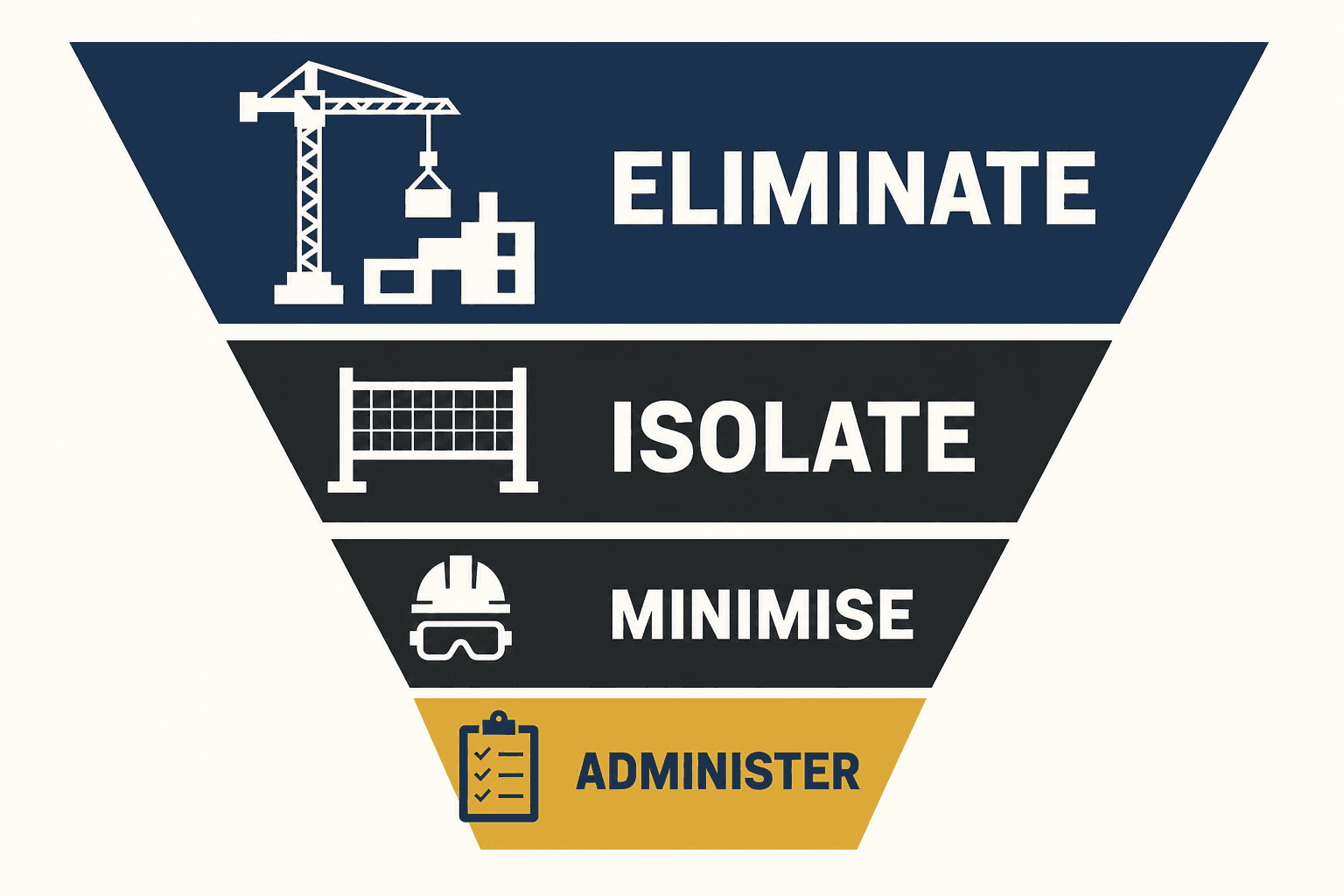
The order the law makes you work through, eliminate first, PPE last.
The hierarchy of controls is the order you must work through when choosing controls for a SWMS. Eliminate the hazard entirely first (regulation 35). If elimination is not reasonably practicable, minimise the risk by substitution, isolation or engineering controls, then administrative controls, then personal protective equipment as the last resort (regulation 36). The SWMS must list controls in that order, not lead with the hard hat.
PPE last does not mean PPE never. It means PPE is the bottom layer, used once you have removed or reduced the hazard as far as you reasonably can with the higher-order controls above it. Work down these four tiers for every hazard you listed in step 4.
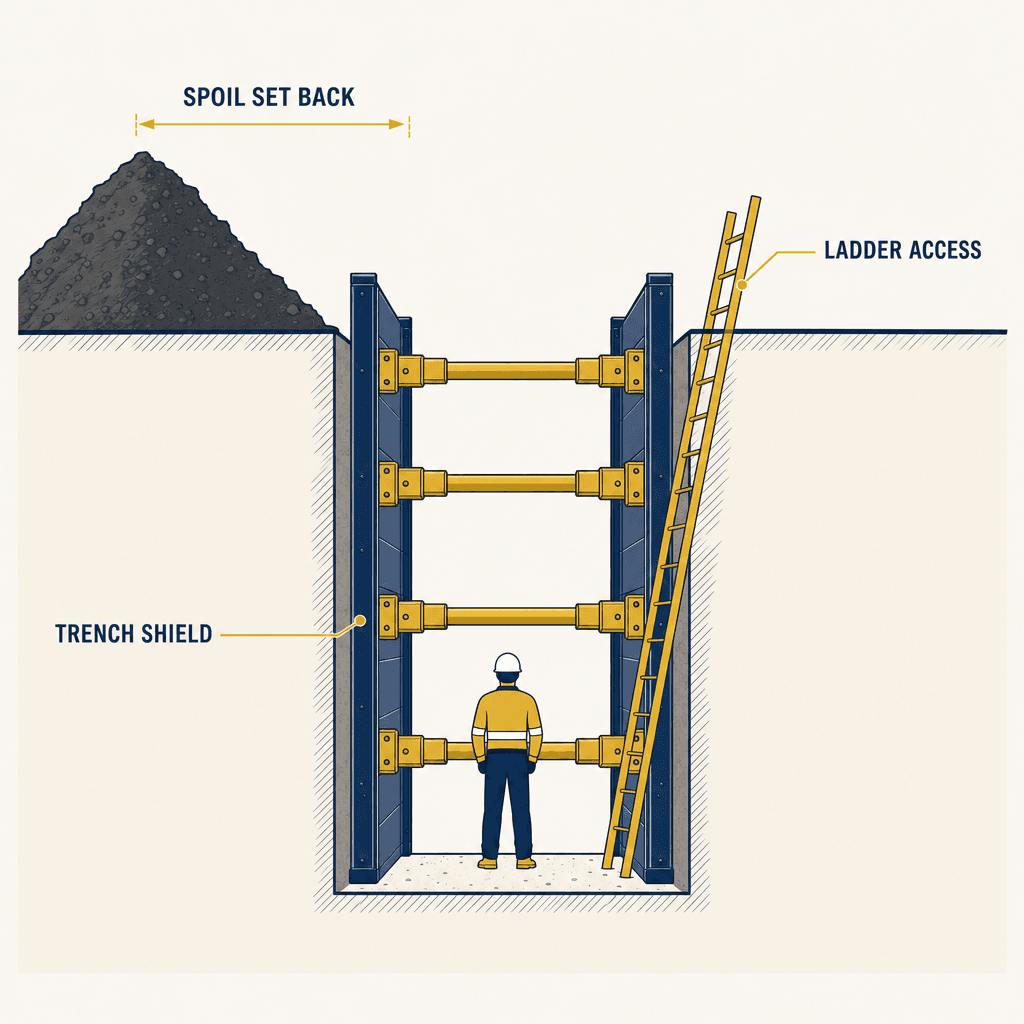
Trench work shows the hierarchy at its clearest. A trench deeper than 1.5 metres is high risk construction work on depth alone (reg 291). You cannot fix a collapse with a hard hat, so the real controls are higher-order: confirm services with Dial Before You Dig and hand-potholing, then shield or batter the walls, keep spoil back from the edge, and control the plant around it. Once you have your trade’s draft, you can generate a draft for your trade, then adjust it on site with your crew.
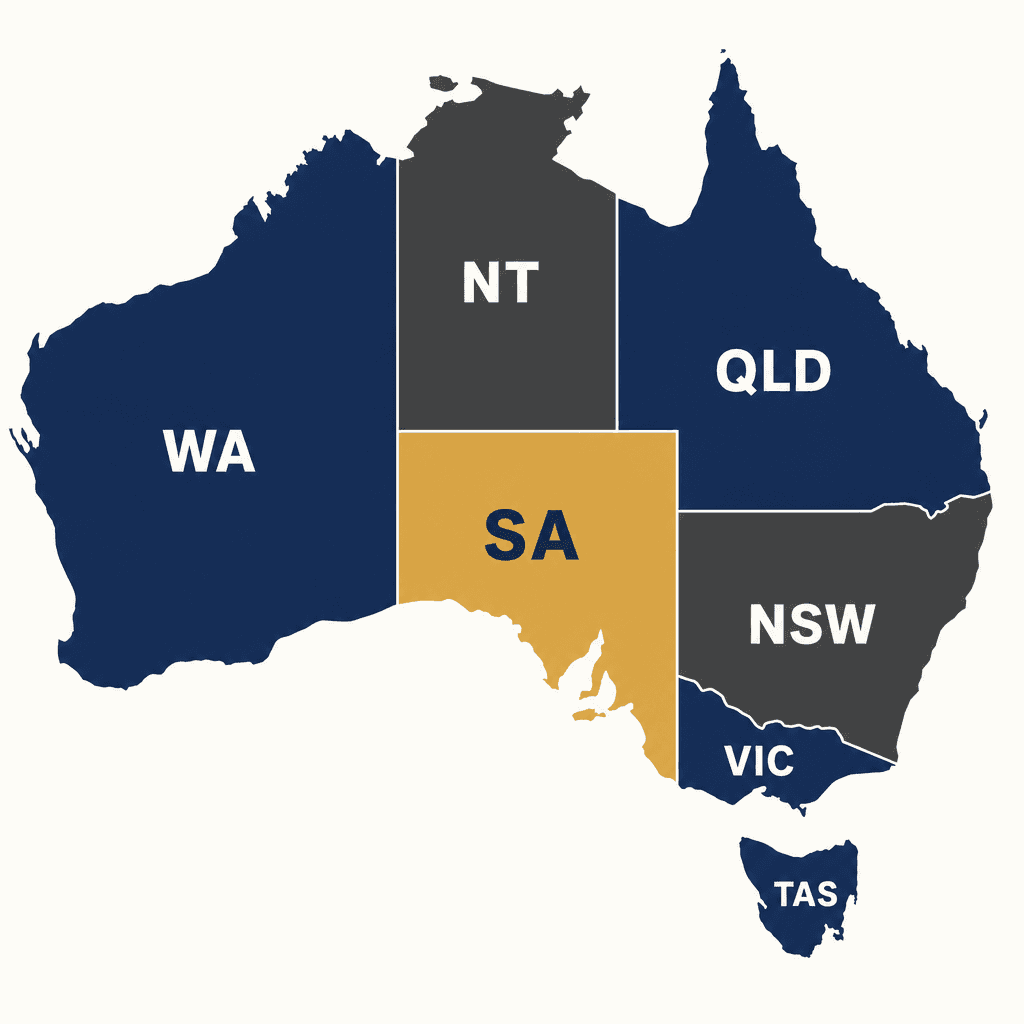
Victoria runs its own regime, and 2 metres is now national.
Most of Australia runs the model WHS Regulations, but three differences matter when you write a SWMS in 2026. Victoria runs its own OHS Regulations 2017 with 19 high risk construction work categories and puts the duty on the employer or self-employed person rather than a PCBU. New South Wales now sits under the WHS Regulation 2025. And from 1 July 2026 South Australia lowered its fall trigger to 2 metres, so 2 metres is now the fall-height trigger everywhere.
The table below is the state-by-state comparison no template seller puts in one place. Note that the principal-contractor project threshold is $250,000 under the model law and $350,000 in Victoria. If you work across borders, try the free, no-signup SWMS tool to get a first draft down and switch the jurisdiction to match the site.
| Jurisdiction | Instrument | HRCW categories | Fall trigger | Duty holder |
|---|---|---|---|---|
| NSW | WHS Regulation 2025 | 18 | 2 m | PCBU |
| Qld | WHS Regulation 2011 | 18 | 2 m | PCBU |
| Victoria | OHS Regulations 2017 | 19 | 2 m | Employer or self-employed person |
| South Australia | WHS Regulations 2012 | 18 | 2 m (from 1 Jul 2026) | PCBU |
| WA, Tas, ACT, NT | WHS Regulations (model) | 18 | 2 m | PCBU |
Penalties for having no SWMS before high risk construction work vary by jurisdiction, so the durable figure to quote is penalty units, not a single national dollar amount. The table below shows how the same breach converts differently by state.
| Jurisdiction | Penalty for no SWMS before HRCW |
|---|---|
| Model states (e.g. Qld) | 60 penalty units (about $10,362 in Qld as at 1 July 2026) |
| Victoria | 60 penalty units for an individual, 300 for a body corporate |
| ACT | Up to $6,000 for an individual, $30,000 for a body corporate |
Sources: SafeWork SA, WorkSafe Victoria, and SafeWork NSW.
Generic and vague are the two that fail most.
The most common SWMS failure regulators flag is a generic, non-site-specific document used unedited across every job. The second is vague controls such as “use appropriate PPE” that leave the decision to the worker on the day. A third, less obvious one is an overly long SWMS: a lengthy, padded document is harder to understand, apply, monitor and review than a short, specific one.
“Generic SWMS often fail because they do not cater to the specific needs and conditions of a particular job site. Workers are less likely to follow a SWMS that feels irrelevant to their specific situation, reducing its effectiveness.”
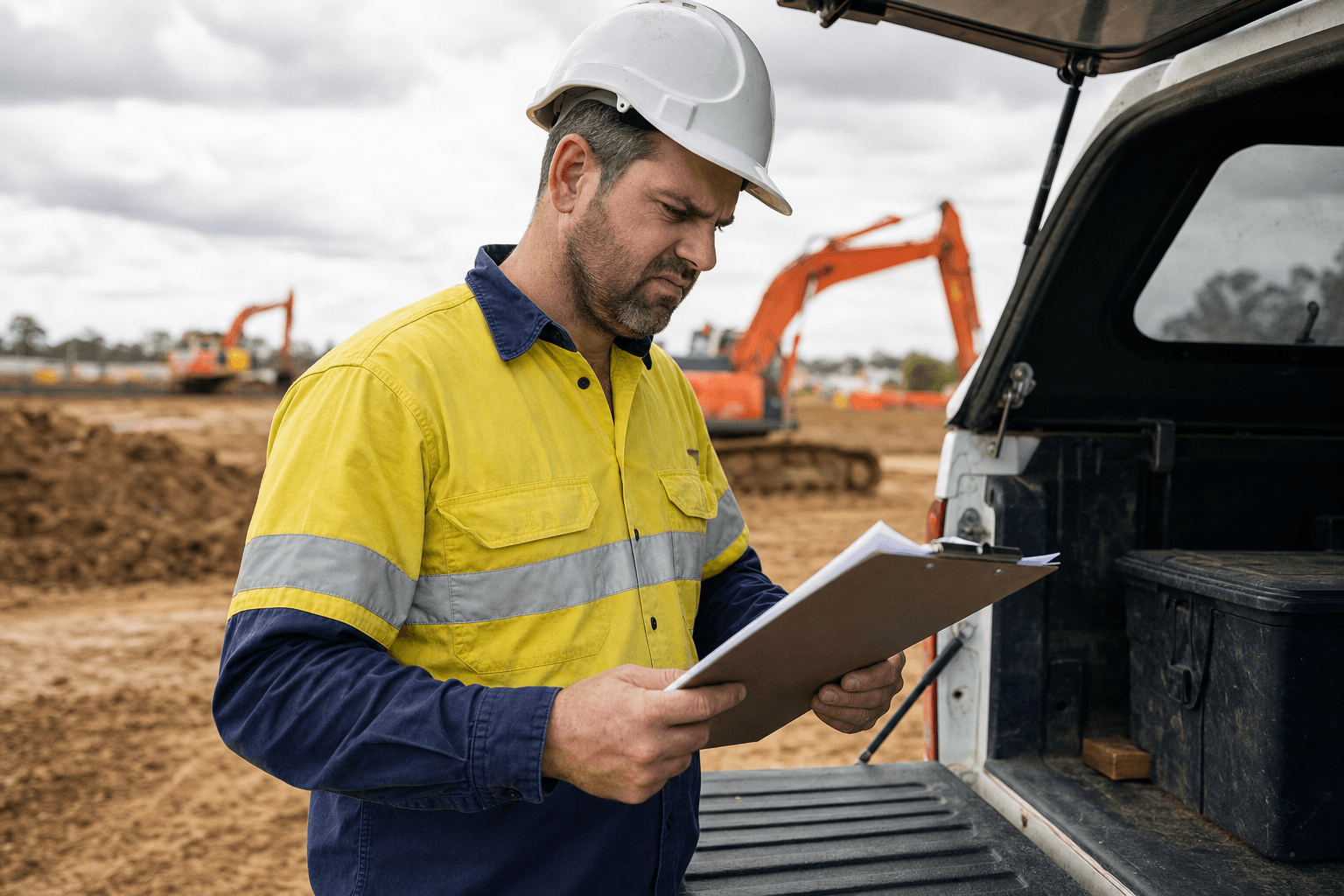
Handing a finished SWMS to the crew to sign is not genuine consultation. SafeWork NSW states that a PCBU must consult workers when they are likely to be, or are, directly affected by a health and safety matter, and that consultation must be regular and ongoing. Inspectors ask workers what they were briefed on, not just whether they signed. Walk the crew through the actual document before the work starts, and record the discussion.
None of this means the paperwork has to be painful. You can get a head start on the paperwork with the free draft generator, no account needed and nothing you enter is uploaded or stored, the draft stays in your own browser. It is a starting point you make site-specific and consult your workers on before any work begins, not a finished document.
An RTO that trains site supervisors and builders, not a template seller.
Prepare Training is a registered training organisation, RTO 45384, delivering nationally recognised building and construction qualifications online. The people who own site safety systems, the supervisors and builders who prepare and review SWMS, build those skills through construction qualifications, which is why this guide is written by an RTO rather than a template seller.
If you run high risk construction work and want the qualifications behind it, the Certificate IV in Building and Construction (CPC40120) covers site supervision and the WHS units, the Diploma of Building and Construction (CPC50220) steps up to construction management and larger-project safety systems, and the Advanced Diploma of Building and Construction (CPC60220) is the senior-management pathway. If you already run sites, Recognition of Prior Learning can turn that experience into a qualification, or browse all building and construction courses.
Not sure which one fits where you want to end up? Our guide to building and construction qualifications by state maps each one to the builder licence it unlocks in every state and territory.
Straight answers to the questions tradies ask most about writing a SWMS.
These nationally recognised qualifications meet the licensing requirements discussed in this guide.
CPC40120 - CPC40120 - Nationally recognised building and construction training for builders, site supervisors and construction managers.
CPC50220 - CPC50220 - Nationally recognised building and construction training for experienced builders, site managers and construction professionals.
CPC60220 - CPC60220 - Advanced building and construction management for experienced professionals working with large and complex projects.
Each state has unique builder licensing requirements. Explore our other guides to compare.
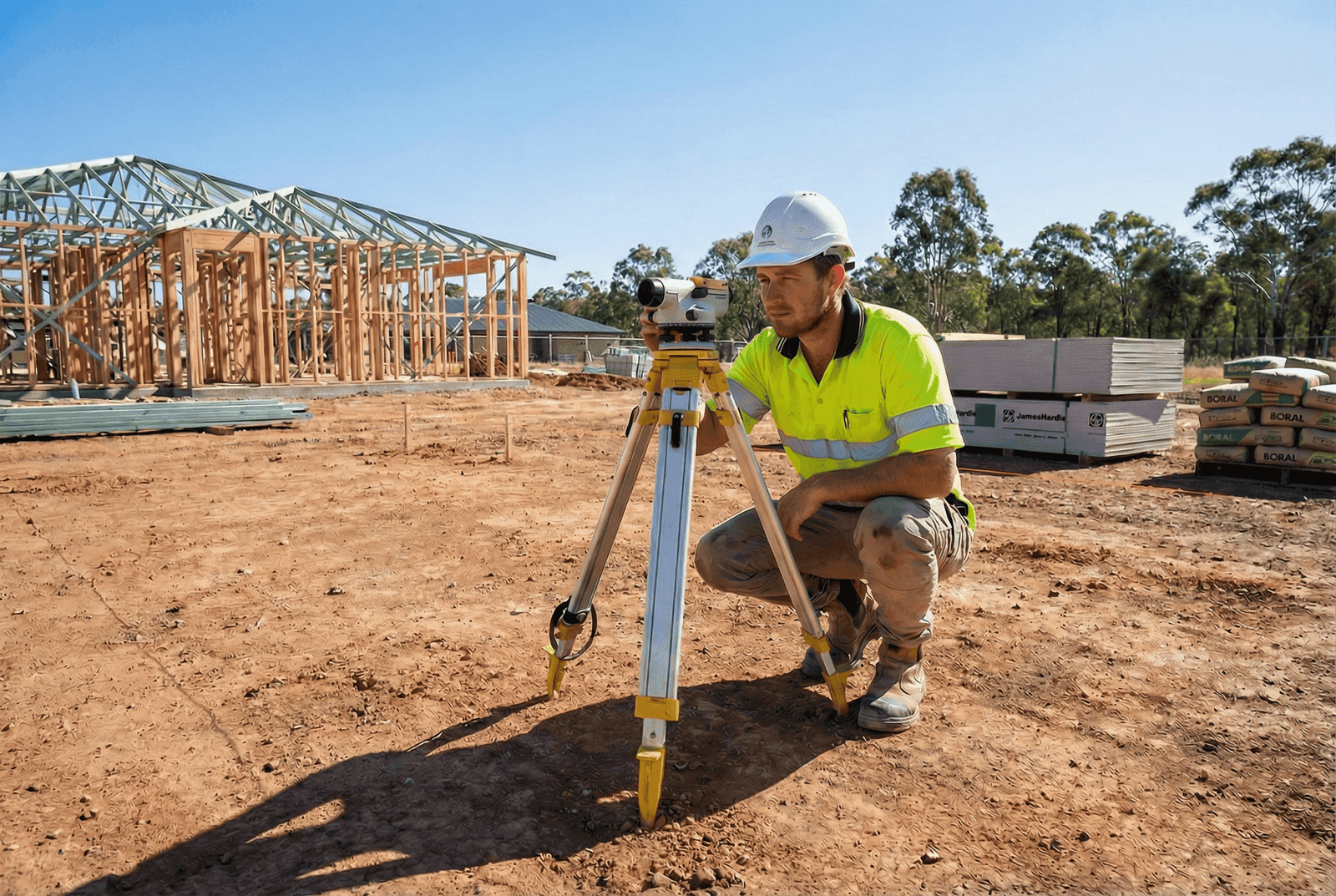
Master site surveys and set-out procedures for Australian construction—levelling techniques, the two peg test, contour plans, cut and fill calculations, and accuracy standards that ensure your buildings are positioned correctly.
Read Article
Master the essential skill of reading construction plans. Everything from site plans to structural details explained in this comprehensive guide.
Read Article
Everything you need to start a tradie business in Australia — from ABN registration and insurance to pricing strategies, finding clients, and growing from sole operator to building company. Construction-specific regulatory expertise from RTO 45384.
Read Article
The complete 2026 guide to Recognition of Prior Learning for construction professionals — step-by-step process, evidence requirements, costs from $500, 4-8 week timeframes, all 8 states accept RPL qualifications, and why 770,000 construction workers could benefit from RPL.
Read Article
One national guide that holds the three CPC building and construction qualifications constant and overlays the builder licence each unlocks in all eight states and territories. Covers the study-first and RPL routes, the experience years by state, and the two places the rule of thumb breaks (Victoria and the NT).
Read ArticleBuilt by Prepare Training (RTO 45384). Use them on the job today, no account needed.
Draft a site-specific Safe Work Method Statement for high risk construction work in minutes. No sign-up.
Open the tool →Work out concrete, brick, timber and plasterboard quantities with waste allowances built in.
Open the tool →Instant per-square-metre build estimates for Sydney, Melbourne, Brisbane, Perth and Adelaide.
Open the tool →If you run high risk construction work and are weighing up a Certificate IV, Diploma or RPL pathway, speak to an advisor for honest, no-obligation advice on the right fit for your trade.