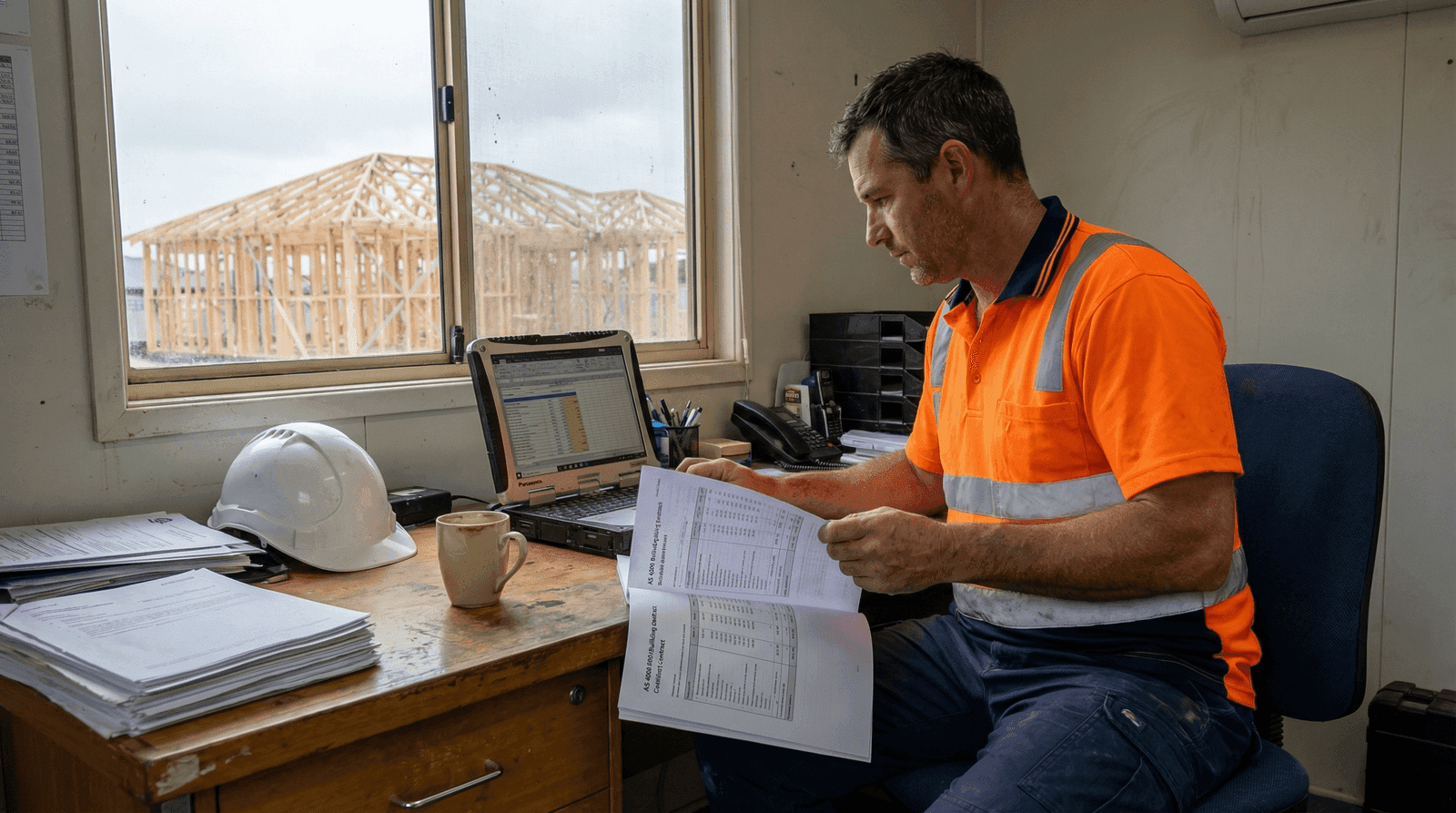
Building Less to Survive: Why Volume-Based Building Is Dying in Australia
The old model — take every job, maintain thin margins, outrun costs with revenue — is being dismantled. New NTA-to-revenue caps mathematically prevent volume building from continuing. With 3,217 construction firms collapsing in 2024 and margins at just 5%, the question is no longer whether to change — it's how fast.
The Numbers That Killed the Volume Model
Building less to survive sounds counterintuitive. Australia is 60,960 homes short of its National Housing Accord target in year one alone, and the Housing Industry Association forecasts a cumulative shortfall of 200,000 homes over the five-year period. Governments are demanding more housing. The instinct is to build more.
But the builders who chased that demand through volume are the ones collapsing. In 2024, 3,217 construction firms went insolvent — a 26% increase from 2,546 in 2023 and 79% higher than the 1,793 recorded in 2022. Construction accounts for 27–28% of all company failures nationally, the largest share of any single industry.
Industry Reality Check
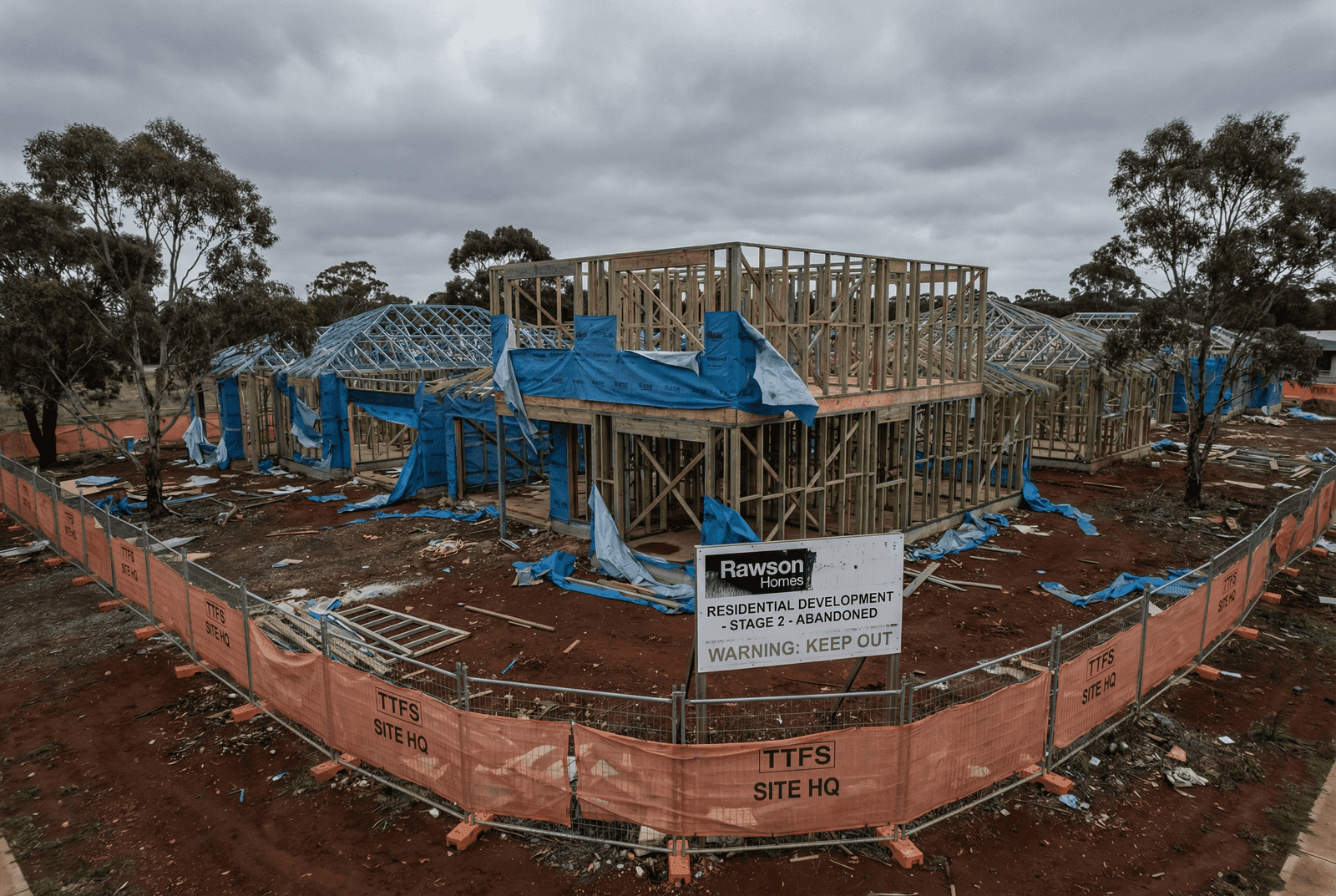
The Ai Group has called the building industry “the least commercially viable branch of construction.” While engineering construction margins surged from 4.2% to 5.5%, residential builder margins collapsed from approximately 8% to 5.6%. For large builders, the Australian Constructors Association reports margins have fallen below 1%.
At 5% margin on a $450,000 home, a builder earns approximately $22,500 per dwelling. That is not a rounding error — it is the entire profit from months of coordination, supervision, and risk. And it is being erased by forces outside the builder's control: material costs up 30.8% since 2020, a workforce shortage of 116,700 workers by 2029, and regulatory requirements that are only tightening.
The Housing Paradox
How NTA Caps Mathematically Limit What You Can Build
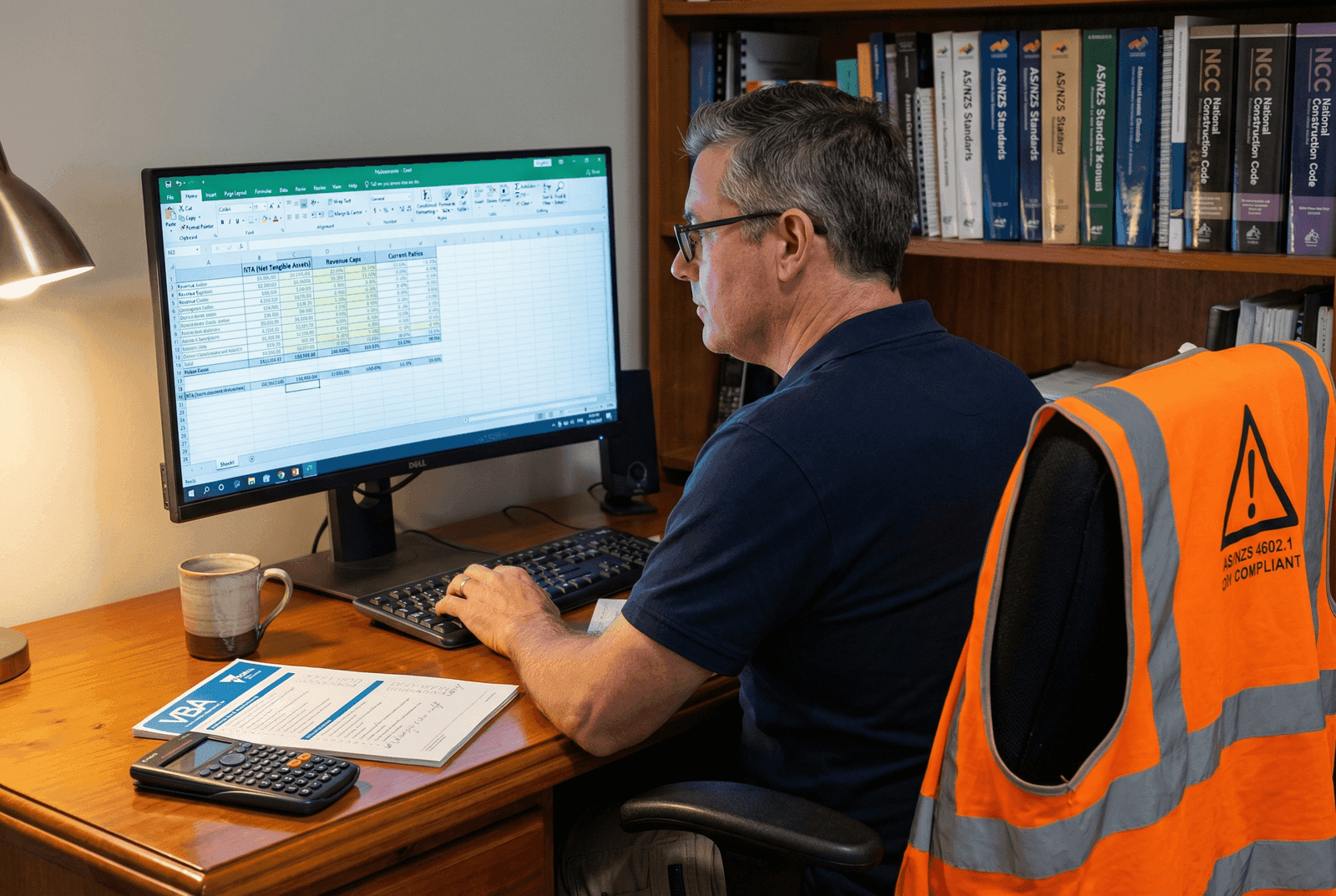
The most important regulatory change Australian builders need to understand is Victoria's new Minimum Financial Requirements. Under the Building Amendment (MFR) Regulations 2026, your net tangible assets impose a hard cap on annual revenue — not a guideline, not a target, a legal ceiling.
The formula is straightforward: maximum revenue = 20 × NTA. At current median build costs of $450,000–$500,000 per dwelling, the impact is stark.
VBA NTA Cap Impact on Project Volume
| Your NTA | Revenue Cap (20×) | Max Homes/Year (at $450K) | Max Homes/Year (at $500K) |
|---|---|---|---|
| $200,000 | $4,000,000 | ~8 homes | ~8 homes |
| $350,000 | $7,000,000 | ~15 homes | ~14 homes |
| $500,000 | $10,000,000 | ~22 homes | ~20 homes |
| $675,000 | $13,500,000 | ~30 homes | ~27 homes |
| $1,125,000 | $22,500,000 | ~50 homes | ~45 homes |
A builder who previously completed 30 homes per year with $200,000 in NTA now needs $675,000 — a 3.4× increase in capital — just to maintain their existing volume. A builder doing 50 homes per year needs $1.125 million in NTA, a 5.6× increase.
Queensland Comparison
Queensland's QBCC allows a slightly higher multiplier — up to 25× for mid-range categories (Cat 2–6). A builder with $500,000 NTA can do approximately 27 homes per year in Queensland versus 22 in Victoria. However, the QBCC prohibits trust assets entirely, while Victoria progressively discounts them to nil over four years. Many family-operated building businesses run through trusts — check your structure now. See the QBCC Licence Guide for full financial category details.
This is not a minor compliance update. It is a structural redesign of who is permitted to build and at what scale. If you are a Victorian builder — or considering builders registration in Victoria — you need to understand your NTA position now, not when the compliance deadline arrives.
One Defect, Two Jobs’ Profit — The Maths of Quality vs Volume
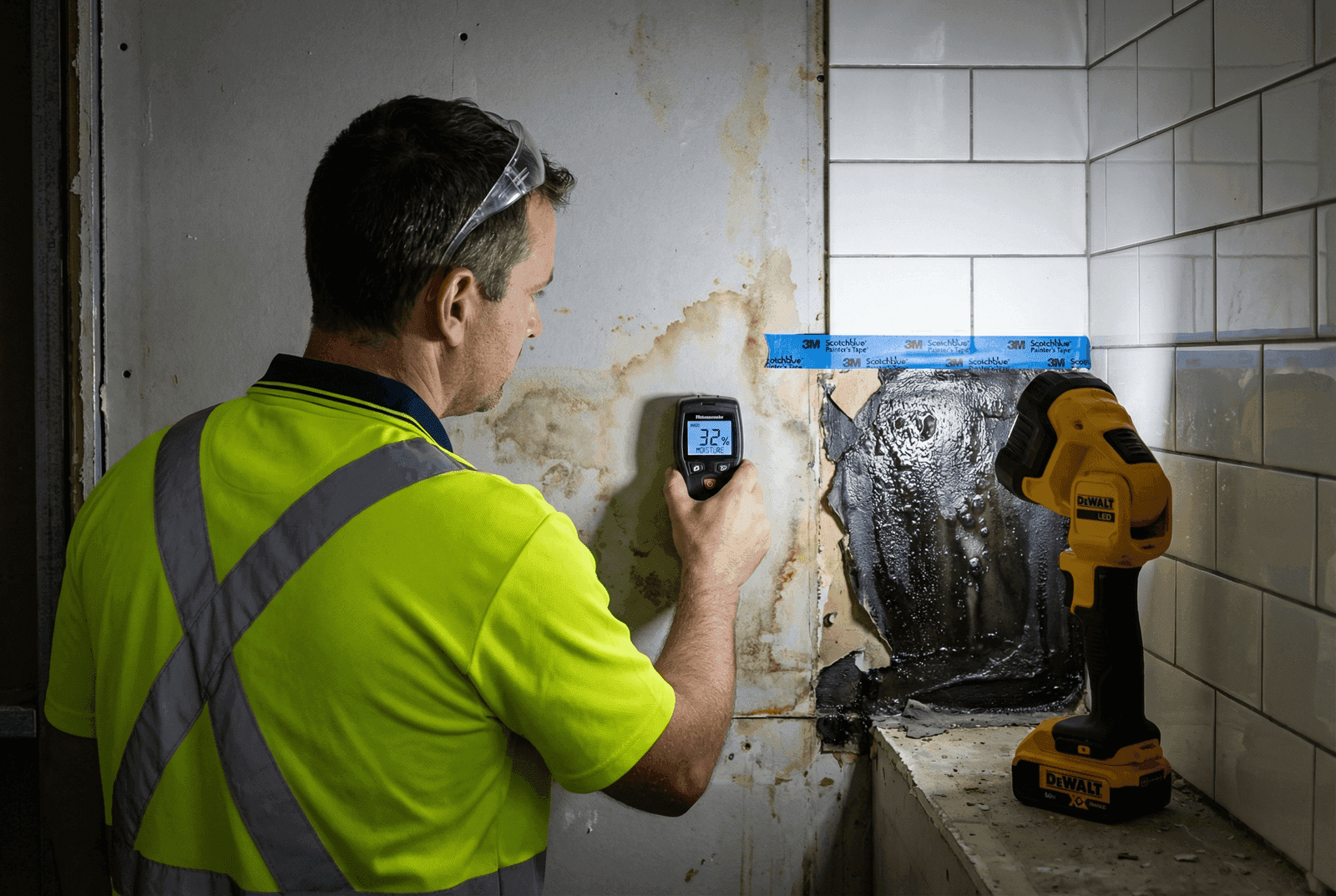
The most surprising finding in the data is the sheer fragility of builder margins. At 5% net margin on a $450,000 home, the profit per dwelling is approximately $22,500. QBCC data confirms the average waterproofing defect claim in 2024–25 was $25,000.
A single bathroom defect rectification wipes out the entire profit from that home — and eats into the next one.
Defect Remediation vs Profit Per Home
| Defect Type | Correct Installation Cost | Remediation Cost | Cost Multiplier | Homes’ Profit Wiped |
|---|---|---|---|---|
| Waterproofing (bathroom) | $50–$200 | $12,000–$15,000 | 300× | 0.5–0.7 homes |
| Waterproofing (QBCC avg claim) | — | $25,000 | — | 1.0–1.4 homes |
| Sliding door threshold | $450 | $15,000–$18,000 | 40× | 0.7–0.8 homes |
| Structural crack repair | $200–$500 | $8,000–$25,000 | 40–50× | 0.4–1.1 homes |
At 20 homes per year, a single $25,000 defect removes 5–6% of annual profit. Two defects remove 10–11%. At the volume end — 50+ homes per year — the probability of multiple defects increases, while the margin per home stays the same. Volume amplifies risk without amplifying profit.
5.5%
of annual profit wiped out
1 defect at 20 homes/yr · 5% margin
11%
of annual profit wiped out
2 defects at 20 homes/yr · 5% margin
Prevention Over Remediation
When Volume Kills: Real Case Studies
The volume model's failure is not theoretical. Three of Australia's most prominent builder collapses share the same root cause: fixed-price contracts, thin margins, and uncontrollable cost escalation.
Porter Davis Homes — 1,700+ Homes Abandoned
Entered liquidation March 2023
One of Australia's largest residential builders, Porter Davis operated a high-volume model with fixed-price contracts signed during the housing boom. When material and labour costs surged post-COVID, the company continued trying to honour contracts at a loss. Over 1,700 homes in progress were abandoned. Hundreds of additional signed contracts went unfulfilled. Homeowners were left with unfinished properties and minimal protection.
Source: Forward Path Advisory — Building Company Insolvencies in Australia
Pivotal Homes — When One Trade Cost Doubles
Collapsed May 2022
This Queensland builder saw bricklayer rates increase 100% and carpentry rates increase 44% in just 12 months. All existing contracts were fixed-price. Pivotal attempted to secure $25 million from clients to cover cost overruns — and failed. A single trade cost doubling destroyed the entire financial model.
Source: Industry analysis — construction cost escalation case studies
Metricon — Australia's Largest Builder Nearly Falls
Near-collapse May 2022, rescued via $30M injection
Even Australia's largest residential builder was not immune. Metricon faced the same cost pressures affecting the entire industry and came to the brink of collapse. Survival required an extraordinary CBA facility increase and a $30 million shareholder injection. If the best-capitalised volume builder in the country needed emergency rescue, the model itself is broken.
Source: Industry analysis — builder recapitalisation events
Common Pattern
Why Boutique Builders Are Winning
While volume builders struggled with centralised call centres, 12-month-plus build times, and unpredictable workloads, a different model has been gaining ground. Smaller, boutique builders in Queensland and Western Australia are winning market share by competing on certainty rather than price.
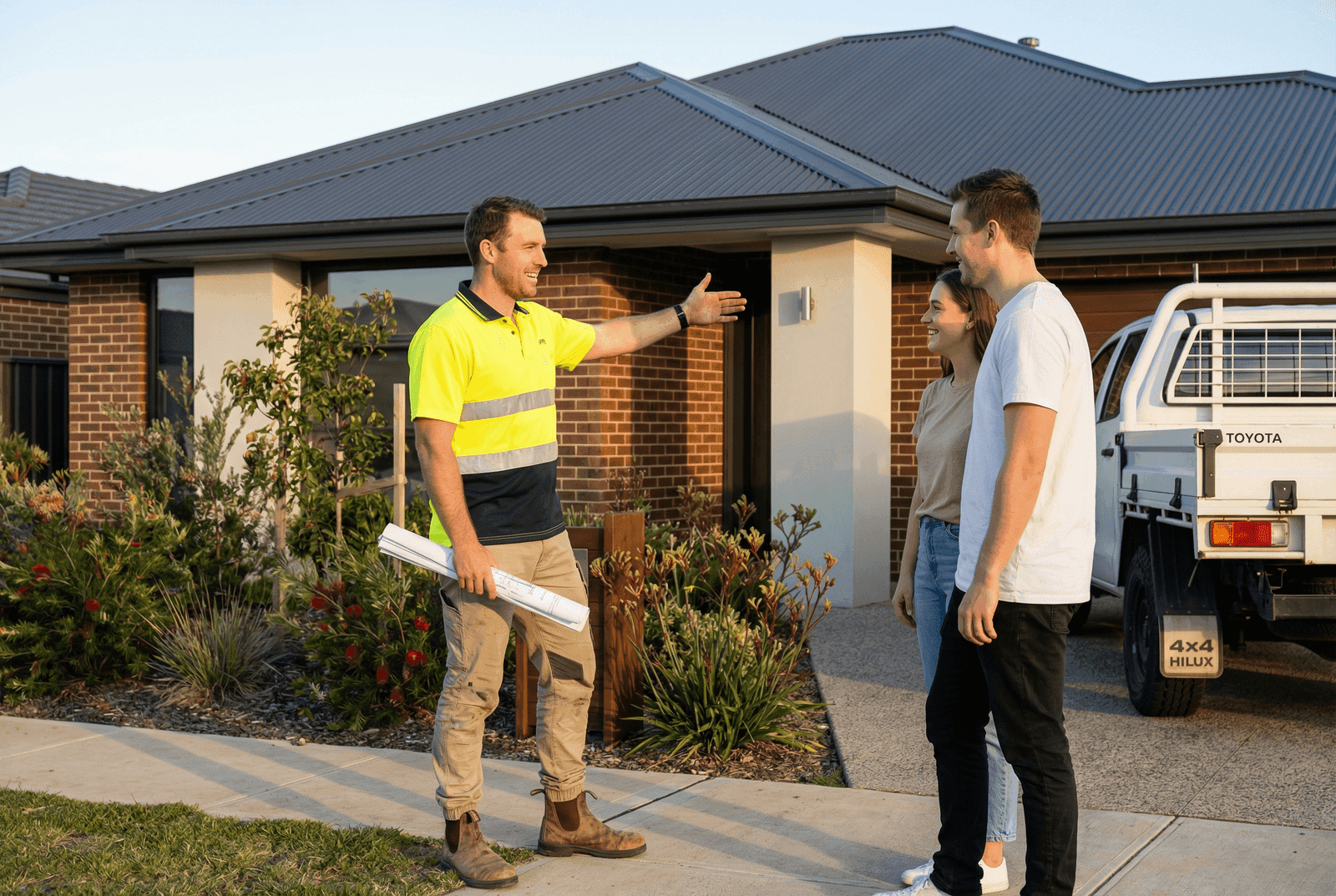
As The Good Builder reports, these builders are “winning on certainty, speed and service rather than price. Direct owner contact, loyal trades, predictable workloads.” Build time has become the new currency — 6–9 months versus 12+ months from volume builders.
Volume Builder Model
- Centralised call centres
- 12+ month build times
- Fixed-price contracts
- Thin margins amplified by volume
- Subcontractor churn
- Higher defect probability
Boutique Builder Model
- Direct owner contact
- 6–9 month build times
- Flexible contract structures
- Sustainable margins on fewer jobs
- Loyal, consistent trade network
- Quality-first supervision
The Viability Maths
A boutique builder completing 12 homes per year at 10% margin on $500,000 builds earns $600,000 in profit. A volume builder completing 30 homes at 3% margin on the same builds earns $450,000 — while carrying 2.5× the risk, 2.5× the compliance burden, and needing 2.5× the NTA to operate legally under the new caps. Building less can mean earning more.
What the New Regulations Mean for Your Business
Every Australian state is tightening the financial screws on builders. Victoria is leading the most aggressive reform in Australian building regulation history, but Queensland and NSW are not far behind.
Victoria's Building and Plumbing Commission is becoming the most powerful building regulator in Australian history. It simultaneously sets financial requirements, provides insurance as a monopoly provider, handles disputes, issues 10-year rectification orders, and recovers costs from builders. This creates a regulatory feedback loop that structurally punishes volume-at-the-expense-of-quality.
Financial Requirements by State
| Requirement | Victoria (BPC) | Queensland (QBCC) | NSW |
|---|---|---|---|
| NTA Revenue Multiplier | 20× NTA | Up to 25× (Cat 2–6) | Evolving |
| Minimum NTA | Tiered by revenue | $46,000 (SC2 minimum) | Varies by class |
| Trust Assets | Discounted to nil over 4 years | Prohibited entirely | Under review |
| Reporting | Quarterly (continuous monitoring) | Annual + event-based | Annual |
| Insurance | BPC monopoly provider | Multiple providers | Multiple providers |
Important Disclaimer
Building a Viable Business in the New Reality
The volume model is dying, but building is not. The builders who survive will be those who treat their qualifications, financial position, and project selection as strategic assets — not just compliance boxes to tick. Here is what the transition looks like.
From Volume to Viability: 6 Steps
Know Your NTA Position
Calculate your current net tangible assets. Apply the 20× multiplier (VIC) or relevant QBCC category cap. This is your maximum revenue — plan your project pipeline around it.
Set a Sustainable Volume
Choose the number of homes per year that your NTA supports and your team can deliver at high quality. For most builders, this means 8–15 homes, not 30–50.
Fix Your Contract Model
Move from fixed-price to cost-plus or rise-and-fall contracts where possible. Include material cost escalation clauses. Never sign a contract you cannot deliver profitably if costs rise 15%.
Invest in Quality Supervision
Defect prevention is margin protection. One $25,000 rectification wipes out a home's profit. Qualified site supervisors catch $50 problems before they become $15,000 problems.
Build Your Trade Network
Loyal, consistent subcontractors produce fewer defects and more predictable costs. Pay fair rates, provide steady work, and treat your trades as partners rather than replaceable inputs.
Upskill Your Business Acumen
QUT and VBA research identifies "limited business acumen" as a primary driver of builder insolvency. Formal qualifications in building and construction provide the financial management, contract administration, and regulatory knowledge that keep builders solvent.
Qualifications as Viability Infrastructure
No competitor in the Australian construction training space connects qualifications to financial viability. But the data is clear: builders fail because of limited business acumen, poor contract management, and inadequate financial oversight — all of which are addressed by formal training.
The Certificate IV in Building and Construction (CPC40120) covers contract selection and administration, cost estimation, legal compliance, and small business finance. The Diploma of Building and Construction (CPC50220) extends this into project-level financial planning and risk management. These are not just licensing prerequisites — they are the business knowledge that separates viable builders from insolvent ones.
For Experienced Builders
Running a building business already?
Frequently Asked Questions
From July 2026 (new applicants) and phased through July 2028 (existing builders), all Victorian domestic builders must meet three financial tests: solvency, a current ratio of at least 1.0, and a revenue cap of 20 times their net tangible assets. A builder with $200,000 NTA faces a maximum annual revenue of $4 million — limiting them to approximately 8–9 homes per year at current median build costs.
Ready to Build a Viable Business?
The builders who survive the next five years will be the ones who invest in their qualifications and financial acumen now. Speak with our team about Certificate IV, Diploma, or RPL pathways — with honest, no-pressure advice.