What Is a Foreman in Construction?
A foreman is the backbone of every construction site — the person who turns blueprints into built reality by leading crews, coordinating trades, and keeping projects on track. If you've worked in Australian construction and wondered what a foreman actually does, what qualifications you need, or how to become one, this guide covers everything.
Foreman Meaning & Definition
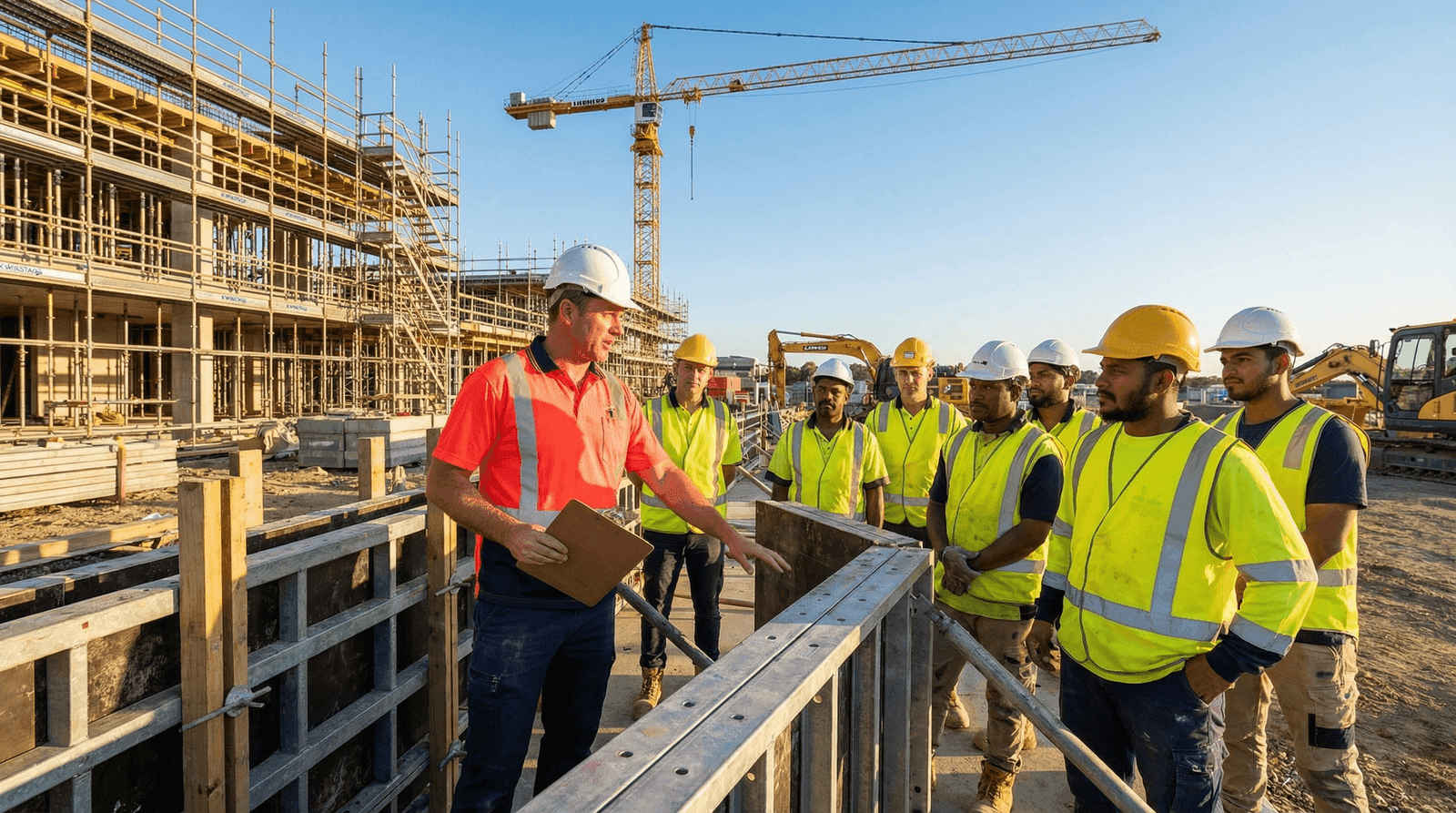
So, what is a foreman? In the simplest terms, a foreman is a construction professional who supervises and coordinates the work of a crew of tradespeople on a building site. The word “foreman” comes from the Old English fore (meaning “before” or “in front of”) and man — literally, the person who stands at the front and leads. In modern Australian construction, the foreman meaning has evolved into a defined supervisory role that sits between the trade workforce and site management.
A foreman is not just an experienced tradie who tells others what to do. The role carries genuine responsibility: a foreman plans daily work activities, allocates labour and materials, enforces workplace health and safety standards, monitors quality, and reports progress to the site supervisor or site manager. On smaller projects, the foreman may be the most senior person on-site. On larger projects, multiple foremen — each responsible for a different trade or work zone — report to a general foreman or superintendent.
The Gender-Neutral Shift
What Does a Foreman Do?
The foreman role spans leadership, technical coordination, safety management, and communication. Here's a breakdown of the daily reality.
Daily Responsibilities
What does a foreman do on a typical day? The role is hands-on and varied. A construction foreman's day begins before the crew arrives — reviewing drawings, checking the weather forecast, confirming material deliveries, and planning the work sequence. Once the crew is on-site, the foreman runs the toolbox talk, assigns tasks, and coordinates with other trades to avoid clashes.
Planning & Coordination
- Read and interpret construction drawings and specs
- Plan daily and weekly work schedules
- Coordinate trades to prevent work clashes
- Order and manage materials and equipment
- Attend site meetings with project management
Safety & Quality
- Conduct daily toolbox talks and pre-starts
- Enforce WHS legislation and site safety plans
- Monitor work quality against standards
- Report incidents and near-misses
- Ensure PPE compliance across the crew
Pro Tip for Aspiring Foremen
Foreman vs Site Supervisor
One of the most common questions in Australian construction is: is a foreman a supervisor? The short answer is that a foreman supervises work, but a “site supervisor” is a specific licensed role in most Australian states. In Queensland, for example, you need a QBCC Site Supervisor licence to legally supervise building work — and that requires specific units from the Certificate IV or higher qualifications. A foreman can operate without this licence, but their authority is limited.
Foreman vs Site Supervisor — Key Differences
| Aspect | Foreman | Site Supervisor |
|---|---|---|
| Scope | Manages a single crew or trade area | Oversees entire site or multiple crews |
| Licence Required? | No formal licence in most states | Yes — state-specific (e.g. QBCC in QLD) |
| Qualification | Trade cert + experience preferred | Certificate IV in Building (CPC40120) |
| Reports To | Site supervisor or site manager | Site manager or project manager |
| WHS Authority | Enforces rules within crew | Statutory safety responsibilities |
| Salary Range | $73K – $157K | $110K – $180K+ |
For a detailed breakdown of supervisor licensing in Queensland, see our QBCC licence guide. If you're already working as a foreman and want to formalise your role, the Open Class Site Supervisor course is the fastest pathway to a QBCC licence.
Foreman vs Site Manager
Where a foreman focuses on the daily execution of work within their crew, a site manager is responsible for the entire project. The site manager coordinates multiple foremen, manages the project budget and programme, handles client and consultant communication, and holds ultimate responsibility for site safety. Most site managers hold a Diploma of Building and Construction (CPC50220) and have progressed through foreman and supervisor roles themselves.
Types of Foremen in Construction
Not all foremen are the same. The title varies depending on the trade discipline, project type, and employer structure.
Site Foreman
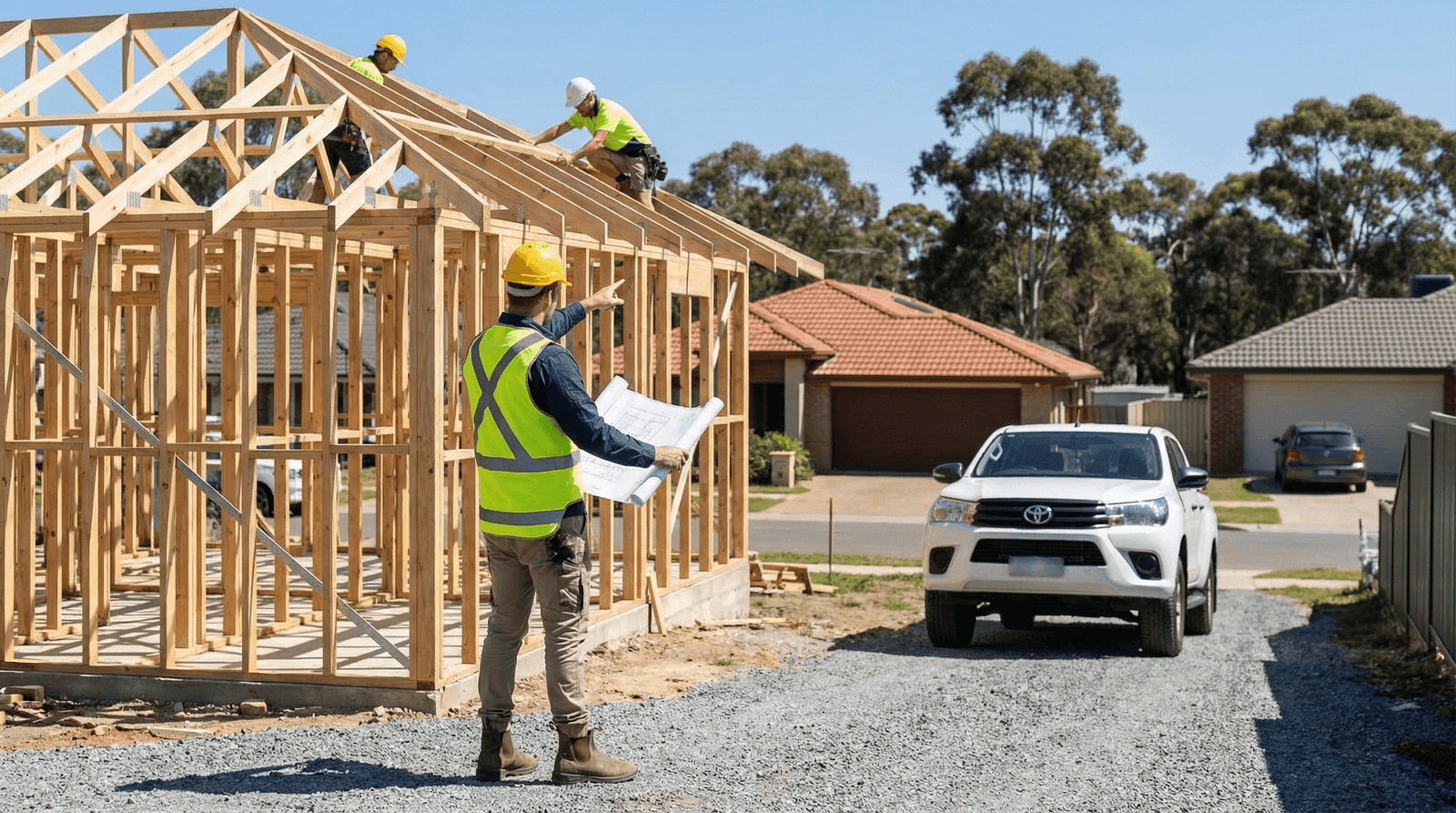
The site foreman — sometimes called a general foreman — is the most common type. The site foreman meaning refers to a person who oversees day-to-day construction activities across the entire site, coordinating multiple trade crews rather than leading a single trade. On a residential build, the site foreman is often the most senior person on-site and acts as the primary point of contact for subcontractors, suppliers, and building inspectors. On commercial projects, the site foreman typically reports to a superintendent or construction manager.
Contractor Foreman
A contractor foreman works for a specific subcontracting company rather than the head contractor. Their primary loyalty is to their employer, but they must also coordinate with the head contractor's site team. Contractor foremen are specialists — a concreting foreman manages formwork, reinforcement, and pours; a plumbing foreman oversees hydraulic rough-in and fit-off; an electrical foreman manages cable runs and switchboard installations.
On large commercial and infrastructure projects, there may be a dozen or more contractor foremen on-site simultaneously, each managing their own crew and scope. The head contractor's general foreman or superintendent coordinates between them.
Common foreman specialisations in Australian construction
| Foreman Type | Typical Discipline | Reports To |
|---|---|---|
| General / Site Foreman | All trades (coordination role) | Superintendent or Site Manager |
| Concreting Foreman | Formwork, reinforcement, pours | Concreting Subcontractor + Site Team |
| Carpentry Foreman | Framing, fit-out, finishing | Carpentry Subcontractor + Site Team |
| Steel Foreman | Structural steel erection | Steel Erection Contractor + Site Team |
| Civil Foreman | Earthworks, drainage, roads | Civil Contractor + Site Team |
| Electrical Foreman | Cable, switchboards, fit-off | Electrical Subcontractor + Site Team |
| Plumbing Foreman | Hydraulics, sanitary, gas | Plumbing Subcontractor + Site Team |
General Foreman vs Trade Foreman
Foreman Qualifications
What you need on paper — and what employers actually look for when hiring foremen in Australia.
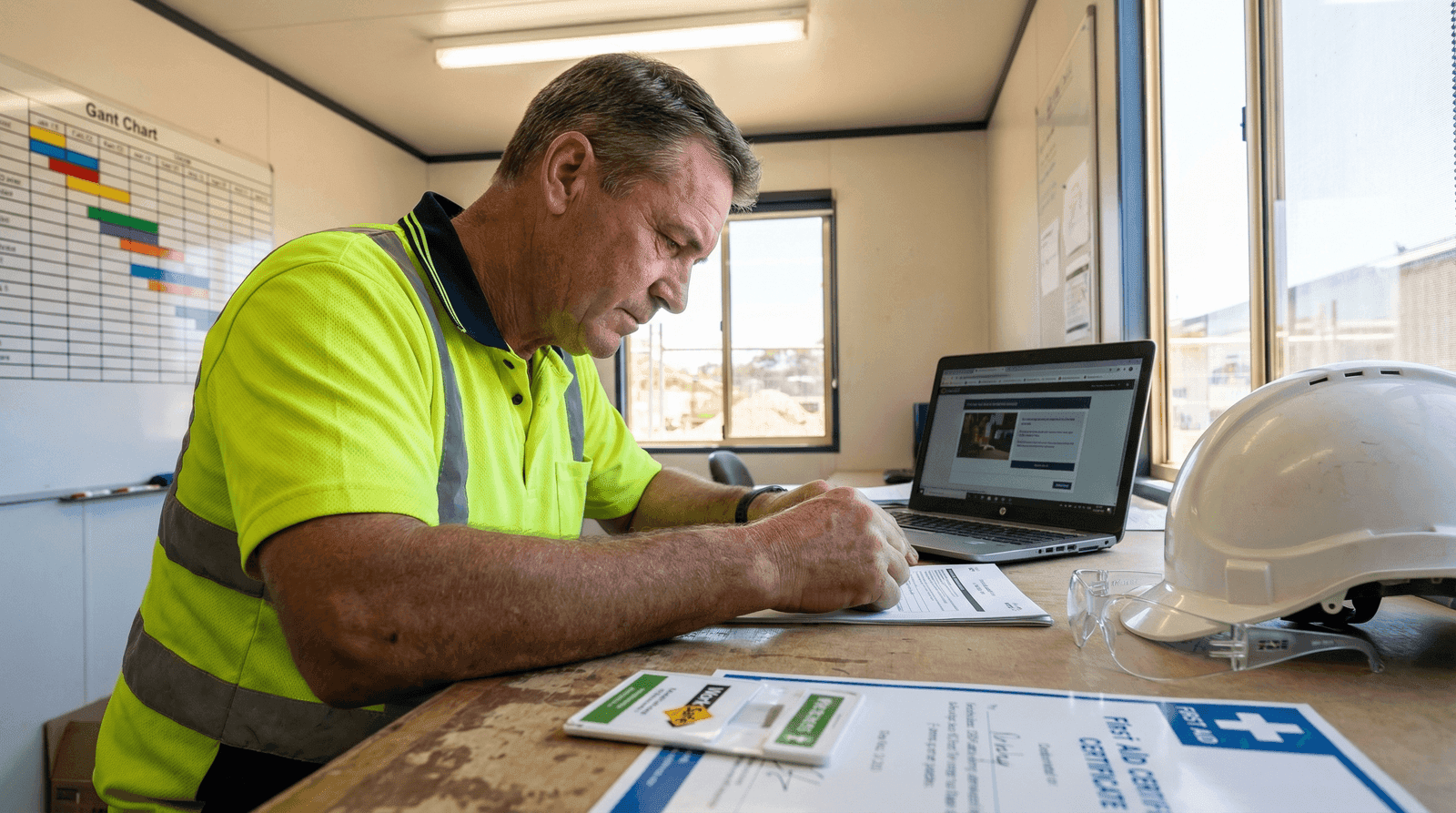
Foreman qualifications in Australia are not rigidly mandated by legislation in the same way that builder or supervisor licences are. However, the industry has clear expectations. Here is what most employers require — and what gives you a competitive edge.
Essential Requirements
- White Card (General Construction Induction)
- Trade qualification (Certificate III or equivalent)
- 5+ years on-site construction experience
- Current first aid certificate
- Valid driver's licence
- Working at Heights ticket (if applicable)
Preferred / Competitive Edge
- Certificate IV in Building and Construction (CPC40120)
- Diploma of Building and Construction (CPC50220)
- State supervisor licence (e.g. QBCC)
- EWP (Elevated Work Platform) ticket
- Crane awareness or rigging tickets
- Confined space and working near services tickets
State Licensing Matters
How to Become a Foreman
The path from tradesperson to foreman follows a proven progression. Here are the three key steps.
Your Path to Foreman
Step 1: Get Trade Experience
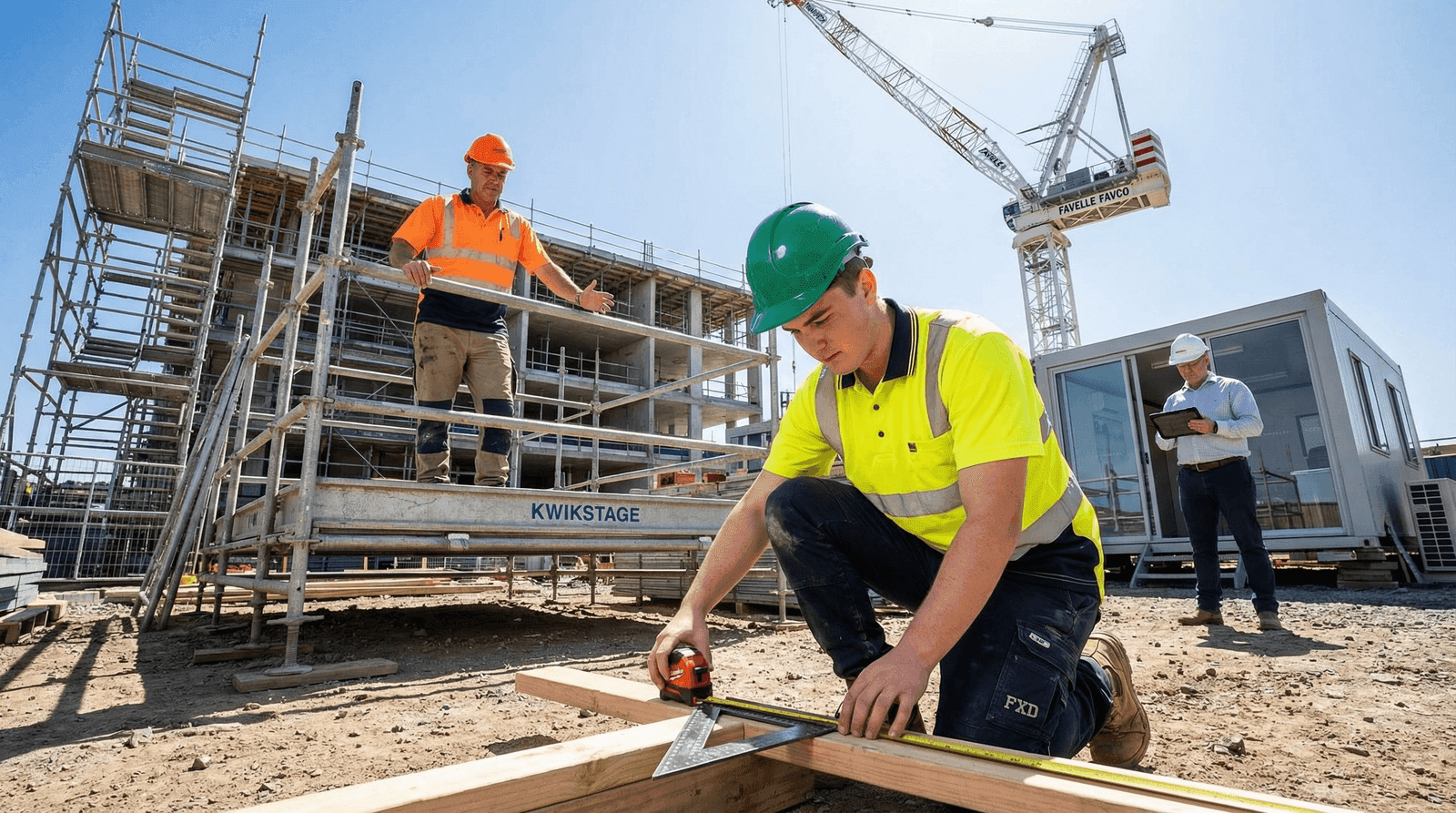
Complete a trade apprenticeship (3-4 years) or accumulate 5+ years of on-site construction experience. Work across different project types — residential, commercial, and civil — to build a broad skill base. Demonstrate reliability, technical competence, and the ability to work independently. Many foremen start as leading hands, taking responsibility for a small crew before stepping into the full foreman role.
Step 2: Earn a Formal Qualification
Obtain a Certificate IV in Building and Construction (CPC40120) to formalise your supervisory skills. This qualification covers building codes, WHS management, project scheduling, quality control, and contract administration. For experienced tradespeople, Prepare Training offers RPL (Recognition of Prior Learning) pathways that assess your existing skills and can be completed in 6-12 months — 100% online and self-paced, so you can study while continuing to work.
Step 3: Apply for Foreman Roles
With trade experience and a relevant qualification, you are competitive for foreman, leading hand, and junior site supervisor roles. Start on smaller residential or fit-out projects to build your supervisory track record. Once you have 1-2 years as a foreman, you can target larger commercial or infrastructure projects where salaries climb to $120,000-$157,000+.
Fast-Track with RPL
Foreman Salary in Australia
How much does a construction foreman earn? Here's what the data shows, broken down by experience and location.
Based on PayScale data from 131 Australian salary profiles (2025-26), the median annual salary for a construction foreman is $106,438. However, the range is wide — from $73,000 at the entry level to $157,000+ for experienced foremen on complex projects. These figures are base salary excluding super, vehicle allowances, and overtime — which can add $10,000–$30,000 to the total package.
Salary by Experience Level
Salary by Location
Construction foreman salary by Australian city — PayScale 2025-26
| City | Average Salary | Relative to Median |
|---|---|---|
| Gold Coast, QLD | $128,574 | +21% above median |
| Perth, WA | $120,000 | +13% above median |
| Brisbane, QLD | $117,447 | +10% above median |
| Sydney, NSW | $105,393 | Near median |
| Melbourne, VIC | $104,965 | Near median |
| Adelaide, SA | $98,264 | –8% below median |
| Canberra, ACT | $83,887 | –21% below median |
Queensland and Western Australia consistently pay the highest foreman salaries, driven by strong demand from the resources sector, infrastructure pipeline, and (in Queensland) the 2032 Brisbane Olympics construction programme. For a broader view of what construction professionals earn across all roles, see our construction salaries in Australia guide.
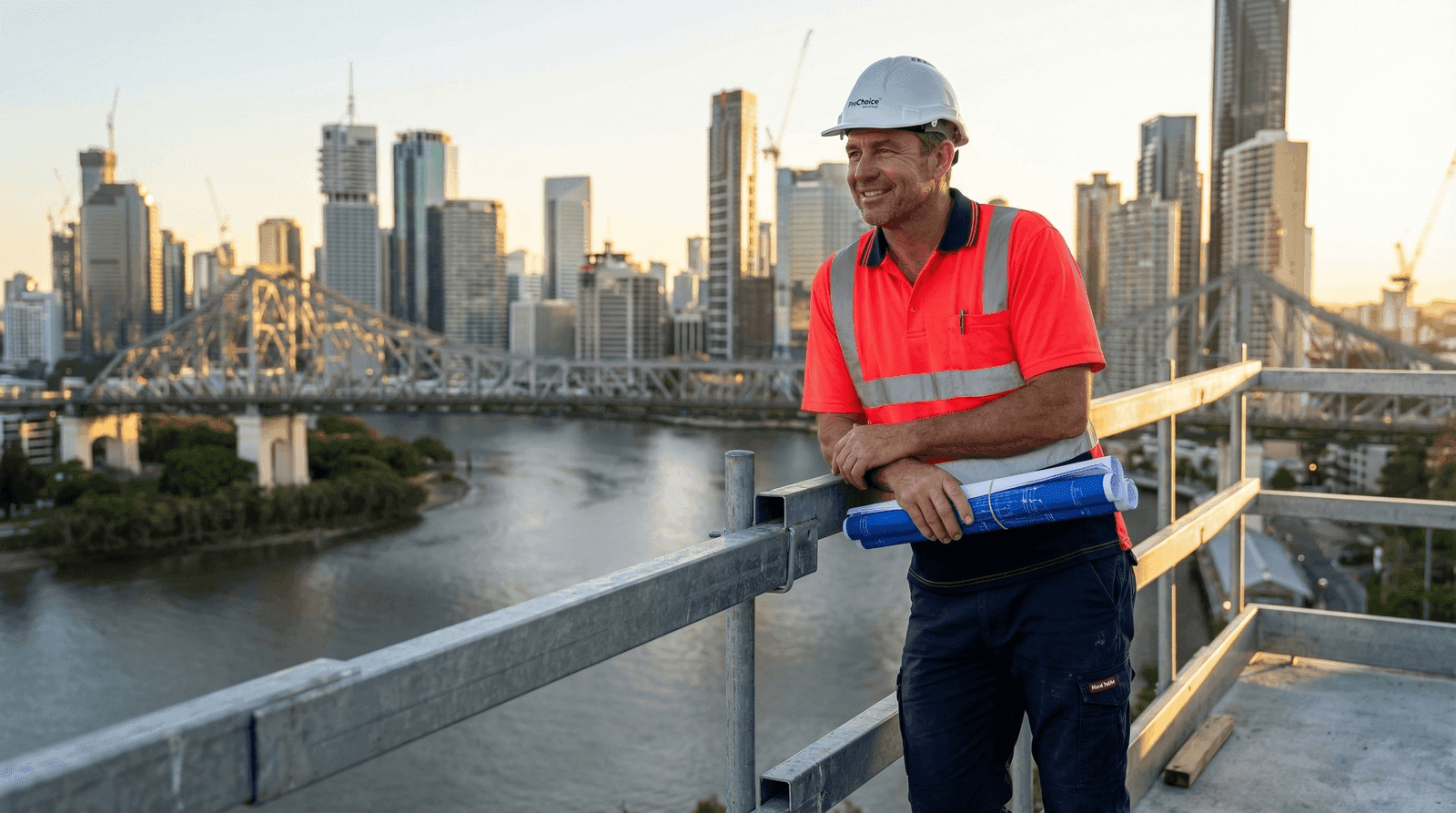
Foreman Salary vs Supervisor Salary
Frequently Asked Questions
Answers to the most common questions about the foreman role in Australian construction.
A foreman in construction is a front-line supervisory role responsible for leading a crew of tradespeople on a building site. The foreman coordinates daily work, enforces safety standards, manages materials and equipment, and acts as the link between the site workforce and project management. In Australia, the term is used interchangeably with "leading hand" on smaller sites, though a foreman typically carries greater authority and responsibility.
Ready to Take the Next Step?
Whether you're a foreman looking to formalise your experience or a tradie ready to step up, our team can help you find the right qualification — with honest, no-pressure advice.